
Food and beverage podcast production built around your claim review
A listing gets you on the shelf. Keeping it takes shoppers who already know why they should pick you up again. A show in your founder's voice can tell that story between promotions, when there is no end cap and no demo table.
We handle recording, editing, and distribution, and we build the schedule around your own review process. Your team and your advisors keep every decision about what an episode says.
Brands whose shows we have produced
Each logo below is an organization that has had a show made with us.


Where do food and beverage brands lose the shelf?
Alli Ball is a former grocery buyer who now teaches packaged food founders. She describes two separate jobs. First you land the wholesale account. Then you sell well once you are on the shelf.
Most CPG marketing goes to the first job. The second job is where brands can lose space they spent years winning, because buyers look at what moves and what sits. Nobody tends to send a warning first.
Sales on the shelf come from shoppers. A shopper who gets the point of your product, and the people behind it, has a reason to buy it again. A recurring show can tell that story between promotions.
We can't promise a show will lift your sales. It does give you a steady place to explain your product in your own voice, and that is the part most brands never get around to.
Your advisors own the claims, and we own the calendar
Food labels carry claim rules. Think about what gets said on air. Calls on compliance, legal, or regulatory questions are never ours to make. They stay with your brand and its advisors.
What stays with you
- Everything an episode says about your product.
- Deciding which statements need review, and who reviews them.
- Substantiating any claim, and every call on FDA rules.
- Saying yes to each episode going live.
What we handle
- A release calendar that holds time for your label and claim checks.
- Recording, editing, and mastering.
- Routing cuts to whoever on your side signs off.
- Fixes your reviewers flag in a draft.
- Release to listening apps after your go-ahead.
How do we schedule episodes around label and claim checks?
A small founder team and a large CPG company check claims in very different ways. These four steps are where we tend to begin.
Map your review path
Early on, we find out who checks claims at your brand, the order they go in, and the days they need. Your timing sets the plan.
Pick your checkpoints
Guest questions, a rough cut, finished clips, transcripts: you choose which ones your reviewers see before release.
Build in slack
Sessions happen well ahead of air dates, so a late sign-off rarely moves an episode. Tell us about trade shows, seasonal launches, and co-packer runs, and we plan around those too.
Release on your yes
Episodes stay unpublished until your side clears them. Any edits get made and sent back to you to check again.
Who will your brand team talk to each week?
One crew from first session to release day
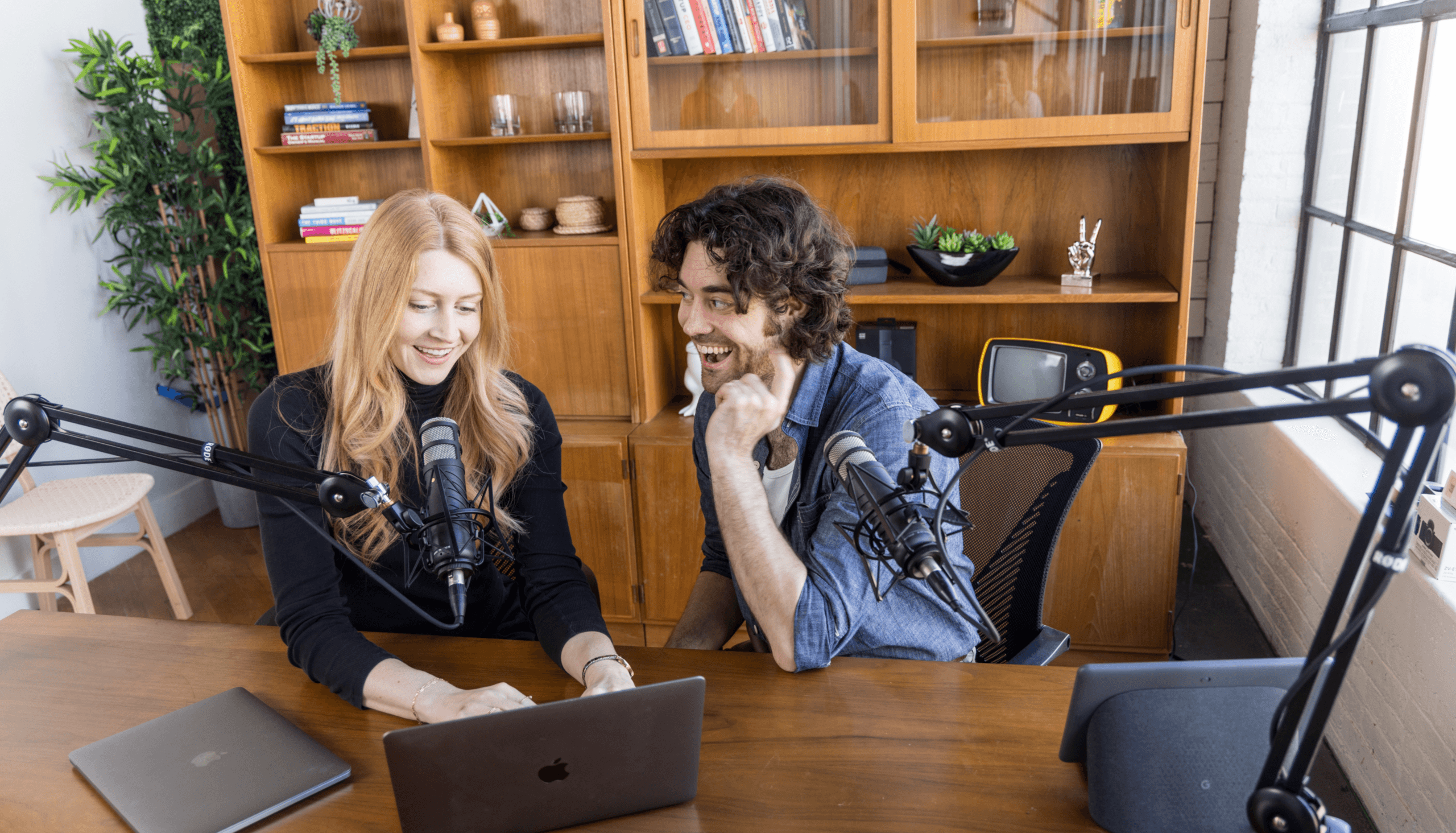
Your marketing lead should not have to chase three vendors between a trade show and a seasonal launch. A single group of people records, edits, and distributes your show, so questions land with folks who already know your product.
On a managed plan, a named producer runs the weekly rhythm. Smaller plans still come with the same crew, and you see the same faces in every handoff.
- Recording and editing by the people who heard your last episode.
- Draft cuts routed to the reviewers you name.
- Release only after your side says go.
Which show fits your stage and your audience?
Start with who you need to reach: a first buyer, shoppers on an existing listing, or your own people. Next, choose a format your people can keep supplying with cleared material. That usually decides whether a brand show lasts its first year.
Founder-led brand shows
Sourcing, production, and your origin story in your own voice. A named person explaining why they made the thing gives people more to remember than a sell sheet does.
Category education shows
Explain ingredients, sourcing, and category context to shoppers in language your team has already cleared. It answers the question that makes someone reach for you twice.
Trade-facing shows
Talk with brokers, distributors, and buyers about category trends, co-packing, and go-to-market. A show will not win you a listing. It can make your brand familiar before your broker walks into the meeting.
Internal and culture shows
For larger manufacturers, a private show on culture, employee stories, and values. Only the staff you add can stream it, through the usual listening apps.
See private podcast hostingBuild the package your brand needs
Some brands want it all. Others need only editing or clips. One team covers whatever you pick, with claim checks planned from week one.
For a food brand on full service, budget $2,100 to $6,500 each month.
Core production
The work that turns a recording session into a finished episode.
- Podcast launch: strategy through your first episodes live, with your category position and review process mapped in on day one.
- Audio production: trained engineers deliver a mixed, mastered file in 3 to 5 business days, the steady sound a long-running show needs.
- Video production: cameras in the kitchen or on the line give you full YouTube episodes and short cuts, checked by your reviewers like the audio.
Growth and hosting
What keeps the show running and in front of listeners.
- Podcast management: your producer handles the weekly running and plans around trade show dates, seasonal launches, and co-packer runs.
- Podcast marketing: one tasting-room chat can feed weeks of audiograms (short audio clips over moving graphics), video snippets, and a transcript, all routed through review.
- Public hosting reaches Apple, Spotify, and YouTube listeners. Staff-only plant updates suit invite-only hosting, which starts at $1,000 a month.
Food Biz Wiz, hosted by a former grocery buyer
Alli Ball hosts it for packaged food founders. Episodes cover co-packing, incubator kitchens, packaging, and working with brokers and distributors. Those founders face the same problem you do, so listen to an episode before you call us.
We have worked with the Resonate team for over 2 years, using their audio production and hosting. The Resonate team has continually been professional: producing top notch episodes that are crisp and clear. Their platform is easy to use and whenever we have questions, the team is prompt to respond and support!Alli Ball, Founder and CEO, Food Biz Wiz
Alli used to buy for Bi-Rite in San Francisco. Her show is made for packaged food and drink founders going wholesale, and Resonate Recordings handles production.
Two more shows, for format ideas
Neither covers food. Play them to hear how an expert interview format and a workplace show come across, then picture your own category in either one.
What can a food and beverage podcast not do?
A podcast will not get you a listing. Buyers decide on margin, category fit, and sell-through, and a show changes none of those on its own. If you are three weeks from a category review, put the money into your sell sheet and your sampling budget.
A show earns its place in the months after the listing, when nobody is watching and your sell-through numbers are quietly deciding whether you keep the space. That is a slower payoff than most CPG marketing is measured on. It is worth hearing before you commit a founder's time to it.
What food founders ask us first
Settle who owns claim substantiation first.
What is a food and beverage brand podcast?
It is a podcast a food, drink, or CPG company makes or sponsors. It talks with shoppers, retail buyers, distributors, or your own team about product story, sourcing, and category know-how. Your own review process decides what each episode can say.
Can a podcast actually help us win retail shelf space?
On its own, no. A buyer decides on margin, category fit, and sell-through. A show gives shoppers a reason to know you, and it gives your broker something to point to when a buyer asks whether anyone has heard of your brand. Treat it as one input to a listing decision.
What about keeping the shelf space after we get it?
That is the harder half. Buyers look at what sells, and slow sellers can lose their spot. A recurring show keeps talking with shoppers between promotions. We can't promise it lifts your numbers, but it gives people a reason to reach for your product again.
Who is responsible for FDA label claim compliance on a food brand podcast?
Your brand is, together with its regulatory and legal advisors. Our part is recording, editing, and a managed release calendar with time held for your checks. Claim substantiation, FDA compliance, and legal calls are never ours.
Do food and beverage podcasts need to consider FDA label claim rules?
That is a question for your regulatory and legal advisors. FDA describes "three categories of claims that are defined by statute and/or FDA regulations": health claims, nutrient content claims, and structure/function claims. If an episode talks about what a product does for someone, we suggest your advisors take a look. Pharma brands deal with a similar split. We schedule that review. We do not perform it.
What does a food and beverage podcast production agency do?
It handles strategy, recording, audio and video production, and distribution, and it builds the release schedule around your review process. Our own food credit is Food Biz Wiz, where founders hear about co-packers, shared kitchens, brokers, and distributors. Our audio production work covers shows like it.
What kind of podcast should a snack or drink brand launch?
Most food and beverage brands land on one of four formats. A founder-led show on sourcing and origin. A category education show for shoppers. A trade-facing show for brokers, distributors, and buyers. Or an internal culture show, which larger manufacturers tend to want. Our readiness assessment is a good place to start.
How does a food and beverage podcast differ from other branded podcasts?
It often speaks to buyers and distributors as well as shoppers, much like a retail brand show, so it has two audiences with different questions. It also carries a review step that many branded shows never meet. Both shape the format and the topics from the first planning call. See how our process works for the general version.
How much does food and beverage podcast production cost?
Monthly full-service fees fall from $2,100 to $6,500. Release frequency, video, and your number of reviewers decide where you land. Private hosting for an internal show starts at $1,000 a month. Our pricing calculator gives a ballpark before we talk.
Looking for your industry?
Other categories bring their own quirks, like who signs off and what a guest may say on air. Regulated fields such as finance, healthcare, and law get calendars shaped around each client's checks, and those clients keep every compliance call.
Let's build the demand behind your shelf space
Thirty minutes. We talk through your product line, your retail relationships, and what a schedule looks like around your own review process.