
University podcast production that fits campus approvals
Before a student, a professor or a dean goes on your podcast, someone has to sign off. Consent forms, communications review, a department head who wants to hear the cut first. We put those steps into the production schedule on day one.
You get one team for the whole show, from planning through publishing. Privacy and policy decisions stay with your school, while we keep episodes on track between approvals.
Some of the organizations behind our shows
Universities, schools and education companies all have different audiences. The review habits are similar, and we have worked with plenty of teams that answer to several people.


What do applicants want to hear from your campus?
Most college marketing talks about rankings and history. Applicants are trying to picture themselves on your campus, and the best evidence is hearing from people who are already there.
A recurring show gives them that. It also gives alumni a reason to stay close and gives faculty a way to explain their work to people outside their field.
When we plan a show with a school, we start with one question: who needs to hear from you this year? A prospective student, a donor and a graduate program applicant want different things. The answer decides the format, the guests and the review steps.
Why does timing matter for admissions content?
Two numbers explain why many admissions teams look at audio early in the funnel.
Fewer graduates means every school is competing for a smaller group. The survey suggests that early research is when students are most open to new voices.
A podcast is one way to show up at that stage. It will not fill a class on its own, and we will not tell you it does.
What kind of show fits your institution?
Most schools start with one audience and add a second later, often once the first is steady. An alumni series may need different sign-offs than a student show, so we sort that out before anyone sits at a mic.
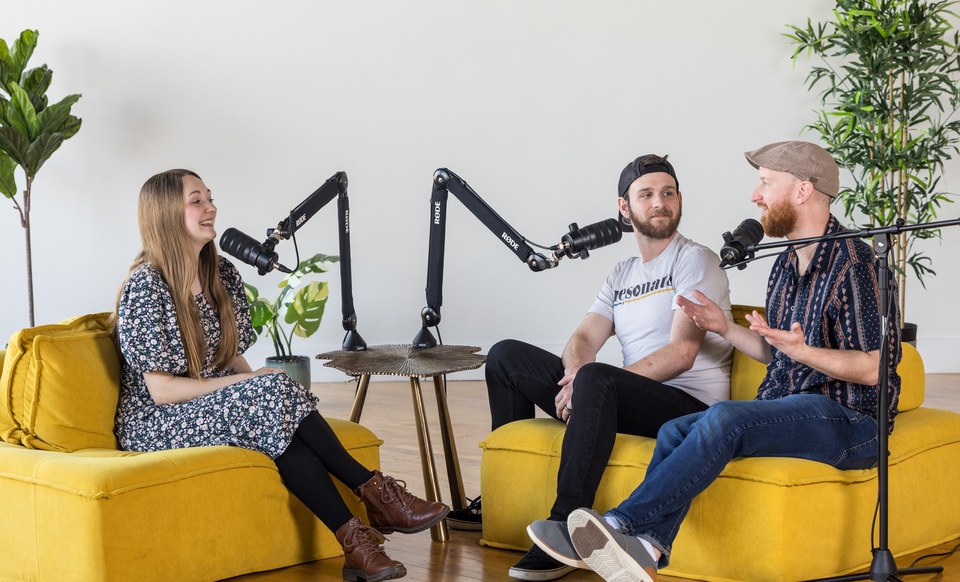
Four formats schools tend to start with
- Admissions and student life. Current students describe campus in their own words, and applicants and parents often trust a peer more than a brochure.
- Alumni and advancement. Alumni stories and campus milestones give your advancement team a regular way to stay in touch between reunions and giving campaigns.
- Faculty research and expertise. Research explained in everyday language for peers, reporters and prospective graduate students, so a non-specialist can follow the work.
- Internal and staff communications. A private show for staff updates, administrative news or professional development across departments and campuses.
Which pieces do you need from one team?
Some schools hand us everything, and others want a few parts. Whichever you choose, approval time is planned from week one, so nobody gets surprised mid-semester.
Plan and launch
First we list every office that signs off, from communications to the dean, so consent and sign-offs never land the week before episode one.
- Concept, audience and format for your podcast launch.
- A review calendar built around your term.
- Show setup ready for your first season.
Record and edit
Engineers with audio degrees edit, mix and master each episode. Expect most edited episodes within three to five business days of your recording.
- Audio production on one shared workflow for every department.
- Full video episodes for YouTube, plus short campus clips.
- Every cut shared for your review before release.
Run, promote and host
Your producer keeps the weekly rhythm going around finals, faculty office hours and the time your reviewers need.
- Podcast management week to week.
- Episode marketing: clips, audiograms (short captioned audio videos) and transcripts that search engines can read.
- Public hosting on Apple, Spotify and YouTube, or private podcast hosting for staff shows.
Have you worked with a university before?
Yes. Stanford is one of our clients. We do not name a specific Stanford show here, because we only attach a title to a client when we have confirmed it with them.
What carries over is the production habit. Several departments, student and faculty guests, and a communications review all fit into one schedule. We have run calendars like that before, including for law firms and financial firms with their own approval chains.
Which shows can you listen to today?
Two of these are shows we produce. The third is independently produced, and we include it only as a format reference for administrators.
What do schools ask before starting a podcast?
Here is what comes up most on our calls.
What is a university podcast?
It's a recurring show from a college, a university or another learning organization. Most aim to grow interest from applicants, keep alumni close, raise the profile of faculty, or strengthen the school's reputation. It runs under the student privacy and consent rules you already follow. See our podcast launch service for how a first season comes together.
Will a podcast actually help enrollment?
On its own, no. A podcast does not fill a class, and anyone who promises that is selling you something. What it can do is give a prospective student a real sense of your campus while they are still deciding which schools to take seriously. Treat it as one part of your recruitment plan.
Do university podcasts need to consider student privacy rules?
Yes, any time students appear or come up in conversation. FERPA protects student education records, and most schools ask for written consent before featuring a student. Your institution decides what consent and review its policies require, and we build the schedule to fit. Healthcare shows follow a similar pattern with patient privacy.
Who is responsible for student privacy compliance on a university podcast?
Your institution is. We bring the recording and editing work, and our timeline bends to fit your approvals. Your school keeps responsibility for FERPA and student privacy standards.
What does an education podcast production agency do?
An agency shapes the concept, captures and cleans up the audio, then publishes each episode. It also fits its work around your internal reviews. We handle audio, video, hosting and publishing, and we shape the show around the audience you care about most, whether that is applicants, alumni or faculty peers.
What kind of podcast should a university launch?
Most schools pick one of four. An admissions and student life show, an alumni and advancement show, a faculty research show, or a private show for staff and administration. Pick based on the audience that matters most to your goals this academic year. Our podcast readiness assessment can help you choose.
Can students appear on a university podcast?
Yes, with the consent your own policies require. Some of the best admissions shows feature current students, because applicants often trust a peer describing their week more than official messaging. Your institution decides what consent it needs and who collects it.
How much does university podcast production cost?
Your price moves with episode frequency, video needs and the number of offices that review each cut. Our full-service plans sit between $2,100 and $6,500 a month. Private hosting for internal shows begins at $1,000 a month. Try the cost calculator or talk to us for a quote shaped to your campus.
What makes a university podcast different from a company podcast?
Yours usually aims at enrollment interest, alumni ties and reputation instead of sales leads. Your schedule also has to absorb consent and institutional review that most company shows never meet. Both shape our plan. Our B2B podcast page shows how company shows differ.
Ready to build a show your institution can plan around?
Set up a half-hour call with our team. We will talk through your audience, your consent and review steps, and what a production schedule could look like for your school.