



“How long is this going to take?” It is usually the second question I get, right after “How much does it cost?”
And I get it. B2B teams operate on quarterly plans, campaign calendars, and budget cycles. You need a real answer, not “it depends.”
So here is the real answer: launching a B2B podcast the right way takes 8 to 12 weeks with a full-service production team. If you are doing it in-house alongside everything else your marketing team already has on its plate, budget closer to 4 to 6 months.
What lives inside that timeline is where most teams get surprised. Not because the work is complicated. Because they underestimate how much strategy, creative decision-making, and coordination happens before a single episode goes live.
Let me break it down phase by phase so you know exactly what you are signing up for.
The Short Answer: 8 to 12 Weeks
That is the window for a full-service B2B podcast launch done correctly. It covers everything from the strategy kickoff call to the moment your first 3 to 5 episodes go live across Spotify, Apple Podcasts, and YouTube.
The range exists because no two shows are the same. A brand that comes in with clear positioning, an available host, and fast internal approvals will land closer to 8 weeks. A brand with a committee approval process, competing priorities, and a host who has never been in front of a mic will land closer to 12.
Both are fine. What is not fine is trying to compress the timeline by skipping phases. I have seen it happen. I will tell you exactly what that looks like later in this post.
| Only 15% of the 4.5 million indexed podcasts as of 2025 are actively publishing new episodes. The majority launched without a real plan and stalled before they ever found an audience. |
What Actually Affects Your Launch Timeline
Before we get into the phases, it helps to know which variables move the needle most. These are the four that consistently make or break a launch date.
1. How clear your strategy is going in
Brands that arrive with a clear sense of their audience, their podcast’s purpose, and how it connects to a business goal move faster through every phase. Brands that are still figuring that out mid-production slow everything down. The strategy phase is not overhead. It is the foundation that every other decision builds on.
2. How available your host is
Your host is the bottleneck you cannot work around. If they are traveling, booked in back-to-back client work, or nervous about getting on camera, the recording phase expands. Build the recording schedule into the launch timeline upfront, not as an afterthought.
3. How fast internal approvals move
Cover art, episode titles, brand positioning, show name. Each of these typically needs sign-off from someone. At a startup, that might be one person. At an enterprise brand, it might be a committee. Know your own organization and factor the approval process into your timeline expectations from day one.
4. Whether you have a production partner
Working with a full-service B2B podcast agency compresses the timeline significantly because you are not stopping to learn production, figure out hosting platforms, or troubleshoot audio issues. The agency runs the process. You show up, make creative decisions, and record.
The Phase-by-Phase Breakdown
Here is exactly what happens inside an 8 to 12 week B2B podcast launch.
Phase 1: Strategy and Positioning — Weeks 1 to 3
This is the work most teams skip or compress, and it is the work that determines whether the show ever finds an audience.
In this phase we define the ideal listener profile, establish the podcast’s unique value proposition, analyze the competitive landscape, name the show, determine the format, and build the first 90-day content plan. We also set up analytics, align on KPIs, and agree on what success looks like at 3 months, 6 months, and 12 months.
Every creative decision in Phase 2 flows from this foundation. That is why Phase 2 moves faster when Phase 1 is done properly.
Here is what that first week actually looks like from our side of the table.
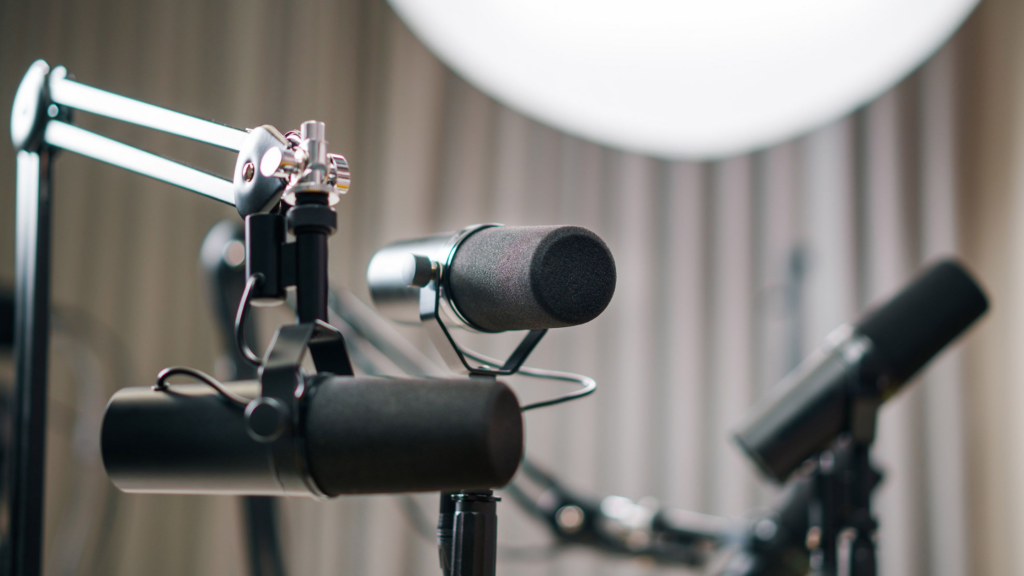
In week one, we resist the urge to immediately hit record into a laptop microphone and focus on actual strategy instead. Over the first seven days, we collaborate to finalize your launch timeline and establish how many debut episodes you are capable of producing. We ask about your goals and what success looks like to you, so we can make it a reality. We also determine the exact hardware you need to sound like a professional.
The questions are direct because the answers drive everything that comes after. Vague answers in week one create timeline problems in weeks four through eight.
Phase 2: Creative Assets — Weeks 3 to 6
This is where your podcast gets its identity. Cover art, intro and outro music, a custom trailer, social media templates, and the full visual and sonic brand of the show all come together here.
Good cover art is not cosmetic. It is the first click decision a potential listener makes. 73% of podcast consumers listen on a smartphone, which means your art is competing at thumbnail size in a fast-moving feed. A logo on a background does not win that competition.
The trailer matters just as much. You have 3 minutes to demonstrate the show’s value before a new listener commits to a 40-minute episode. Think of it as the pitch deck for your podcast. It needs to earn the follow.
This phase also tends to produce the most back-and-forth. Creative decisions take time. The more stakeholders involved in approvals, the longer this phase runs.
The creative asset that surprises clients most is almost always the show name.
For new podcasts, clients get hopelessly hung up on it because they treat it like naming a child rather than building a brand. They put immense pressure on themselves to find that one perfect, poetic title, completely unaware that there is a remarkably simple, data-driven strategy to it.
For existing shows going through a rebrand, the process takes a surprising amount of time to untangle an old identity and pivot without losing the audience you already fought for.
In both cases, the name and visual brand are the front door to your show. If that door is confusing or invisible, nobody is walking in. This phase deserves the time it takes.
Phase 3: Recording and Production — Weeks 4 to 8
Recording typically begins around Week 4, overlapping with the tail end of creative asset development. The goal is to have 3 to 5 episodes fully produced before launch. Not recorded. Fully produced: edited, mixed, mastered, and ready to publish.
Why 3 to 5 episodes? A single episode does not give a new listener enough context to understand the show or decide whether to subscribe. The binge is the hook. When someone discovers your podcast and finds five strong episodes waiting, follow rates climb significantly.
This is one of the principles behind how Resonate structures every B2B podcast launch, and it directly affects long-term show momentum more than almost any other decision.
First-time hosts almost always freeze with a fear that they need to be flawless on the mic. The first thing we tell them: lower the stakes.
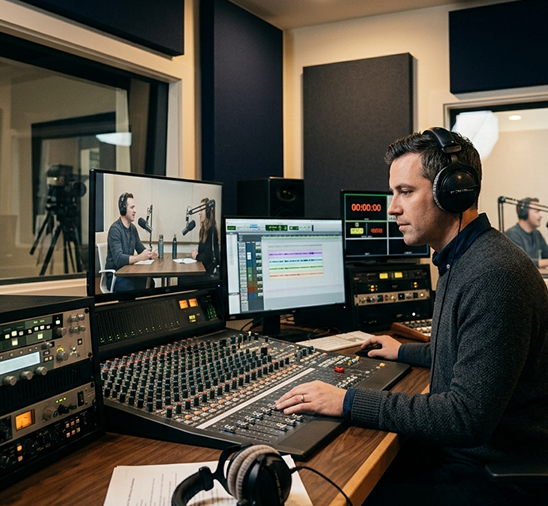
Every stumble, awkward pause, or completely botched sentence gets seamlessly removed by our production team in post-editing. Nothing that goes wrong in the recording session has to live in the final episode.
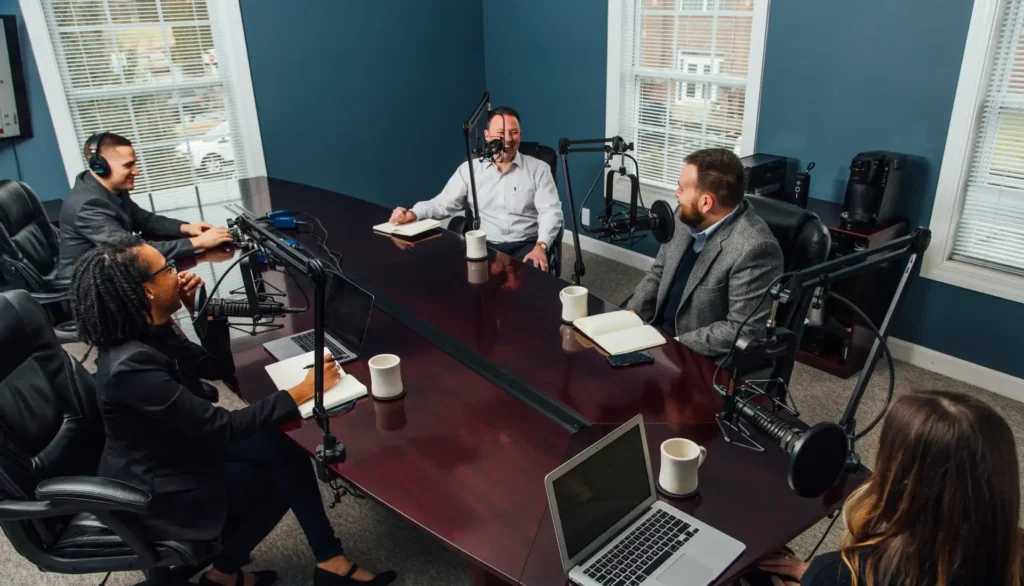
To get you out of your head, we love a good icebreaker. For our full-service clients, our team is literally right there in the virtual room, acting as your production safety net.
| Pro tip: Save your bloopers. Audiences do not connect with polished corporate robots. They connect with real people. Leaving a hilarious mistake at the very end of an episode is the fastest way to show your listeners you have an actual personality. |
Phase 4: Distribution Setup and Launch Week — Weeks 8 to 12
Before a single episode goes live, the technical infrastructure has to be in place. Hosting platform setup, RSS feed configuration, directory submissions to Spotify, Apple Podcasts, Amazon Music, and YouTube, SEO metadata for every episode, and launch analytics configuration.
Launch week itself is not passive. It is a coordinated push across LinkedIn, email, and the website. The goal is to drive enough listener velocity in the first 7 days to qualify for New and Noteworthy placements and signal relevance to platform algorithms.
Resonate builds and executes the full launch plan as part of the managed podcast production service. Nothing is left for the client’s team to figure out last minute.
What Happens When You Rush the Timeline
I have seen brands try to compress a 10-week launch into 4 weeks. Here is what happens.
The strategy phase gets cut to a single kickoff call. The ideal listener profile stays vague. The value proposition sounds like every other business podcast in the feed. The cover art gets approved by whoever is available, not whoever cares most about the brand. The trailer is recorded before the host is comfortable on mic. The first episode goes live with no launch plan behind it.
Three months later, the show has 47 downloads and the marketing team is debating whether to “put it on pause.”
Launching fast feels like momentum. It is usually the opposite.
We once saw a brand pick and choose which parts of our methodology to follow. They launched into the most saturated category on a highly competitive release day with exactly one episode. They had real goals to break into the Top 100, but ignoring the structural advisement and rushing the process capped their growth potential right out of the gate.
Doing it the right way transforms a frustrating launch into a highly scalable asset. The process exists for a reason. Trust it.
DIY vs. Full-Service: How the Timelines Compare
If your team is handling this in-house, the same 8 to 12 week process typically runs 4 to 6 months, sometimes longer. Not because the work is harder, but because podcasting is a new discipline for most marketing teams and it competes with everything already in the queue. Our full breakdown on when to hire a podcast production agency versus going DIY is worth reading if you are still deciding.
| The key difference: a full-service agency runs strategy, creative, and production simultaneously. In-house teams almost always run sequentially, waiting on one phase to finish before starting the next. That gap alone accounts for most of the timeline difference. |
It is not about effort. It is about structure.
The Timeline Is the Strategy
How long it takes to launch a B2B podcast is not just a logistics question. It is a signal of how seriously you are taking the medium.
A team that protects the 8 to 12 week window, works through the strategy phase properly, invests in creative assets, and builds a real launch plan is set up for a show that compounds over time. A team that cuts corners to hit a faster date is usually set up for a show that stalls at episode 12.
The B2B podcasts I have seen build real momentum, shows that generate leads, build authority, and run for multiple seasons, are almost always the ones that respected the process upfront.
If you are ready to start, book a strategy call with Resonate Recordings. We will map your timeline, walk you through every phase, and tell you exactly what to expect from week one.