
Video podcasts for healthcare teams that never all work the same shift
Nurses, techs, front desk staff, and administrators don’t often sit in one room at one time. Our healthcare video podcast production gives them an episode they can watch when their shift allows.
You send the recordings. We handle editing, captions, and graphics, and every file waits for your reviewers to say go.
Who should a healthcare video podcast talk to?
Pick one audience first. A show built for one clear viewer is easier to plan, and easier to keep going.
Patients, families, and the providers who refer them
- A clinician explaining how a service line works, face to face.
- A walk through what a first visit feels like.
- Conversations that put a friendly face on a big system.
Clinical and non-clinical staff
- Leadership updates for people who couldn’t make the meeting.
- Training talks that a night crew can’t catch live but can watch later.
- Stories from other units, so teams learn what their colleagues know, and don’t reinvent it.
What does a camera add for a team on shifts?
Audio travels well. Video adds a few things that suit busy floors, and they’re worth knowing.
Watch on a break
Staff can catch an episode in a quiet room between tasks, then pick it up again later.
Captions for loud places
A caption file and burnt-in captions let people follow along with the sound off.
Faces people recognize
Seeing a chief nurse or a department head speak builds a familiarity that a memo can’t.
How many workers in health and education aren’t on a daytime schedule?
A real share of them. That’s why a single live meeting leaves people out.
That BLS group includes schools as well as hospitals and clinics. Treat the figures as a rough national guide, not a count of your own staff.
The point is simple: a show people can watch on their own time reaches more of them.
What in a video episode could your reviewers care about?
A camera shows more than a microphone does. Check with your privacy and compliance leads about which of these they’d like to read or watch first.
| Piece of the episode | Why a reviewer may care | What we do about it |
|---|---|---|
| The full episode | It shows what was said, and what’s visible behind the speaker. | The finished cut goes to you first. Nothing posts before that. |
| The room and the background | A screen, a badge, or a whiteboard can slip into frame. | Brief hosts and guests before recording. Many teams start by keeping patient details out of episodes altogether. |
| Name titles and pop-ups | An editor types these on screen, such as a speaker’s role. | Put your preferred wording in the upload notes. |
| Captions | A caption file puts the full transcript in viewers’ hands. | We deliver it with the episode so reviewers can read it too. |
| Short clips | One sentence can read differently out of context. | Each clip waits for the same approval as the full episode. |
Who decides what’s safe to say?
Your team does. Your privacy officer, legal counsel, and clinical leads know the rules that apply to you, and we don’t pretend to.
What stays with your organization
- Choosing what’s said, shown, and captioned.
- Reading each episode against the policies you’ve set.
- Giving the final sign-off, because that’s your call.
What we do
- Ask on the first call who reviews and how many days it takes.
- Plan recording days and release dates around those review windows.
- Keep every file on hold until you tell us it’s approved.
It’s the same line we draw on our healthcare podcast production work. This page is about the video side of the same show.
Why should the same people edit the audio and the video?
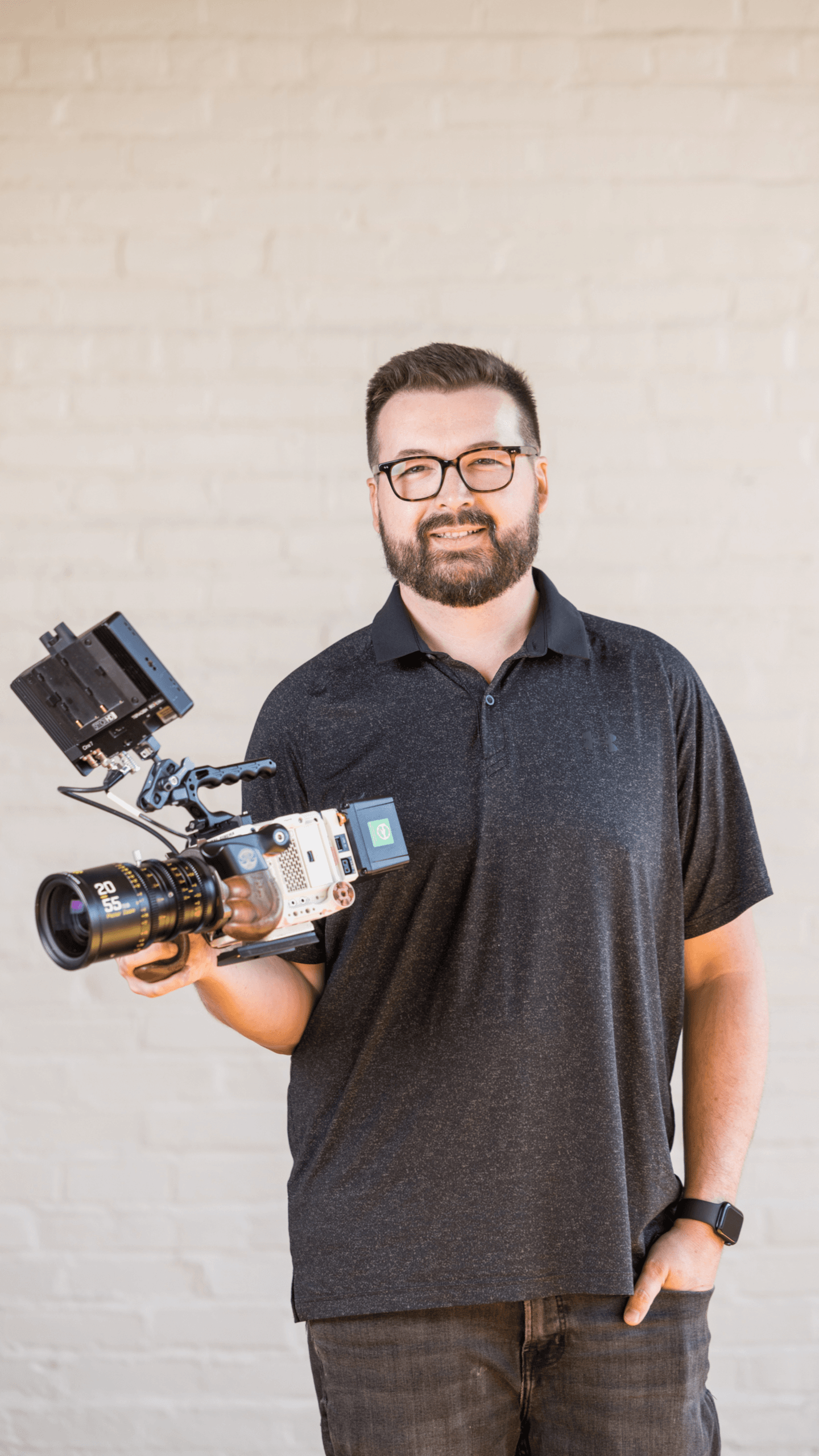
A sharp picture can’t rescue muddy voices. Trouble starts when the video editor and the sound engineer don’t talk.
We’ve produced podcast audio since 2014. Each video episode gets the audio treatment our audio-only shows get, and one team cuts the picture to match.
- Every voice is edited, mixed, and mastered.
- 1080p or 4K video, color-graded and cleaned up.
- Opening and closing bumpers, transitions, and speaker name titles.
- Making an audio show with us now? Adding video keeps your upload and approval routine.
From a raw recording to an approved episode
Your review has a place in all four steps. Our podcast production process page has the day-to-day picture.
Upload your files
Drop your raw video and audio into the Resonate app and add notes.
We produce it
Our editors cut the sound and the picture side by side.
Review and approve
When the cut lands, you’ll get a note. Ask for fixes or sign off inside the app.
Publish when cleared
Put it on YouTube and Spotify once your reviewers sign off.
What if an episode is only for our own people?
Some shows aren’t meant for the public. A public YouTube channel is the wrong home for staff-only content.
Public video shows
- Episodes for patients, families, and referring providers.
- Clips cut for social posts by our podcast marketing team.
- A producer from podcast management can run the calendar around reviewers.
Staff-only shows
- An internal show kept off public apps, as described on our healthcare internal podcast page.
- Feeds you can control with private podcast hosting.
- Leadership updates your teams can listen to on a commute or a break.
Questions about video podcasts for healthcare
What is healthcare video podcast production?
We take a recorded conversation and finish it as a watchable episode, with polished sound, captions, and graphics for YouTube and Spotify. In healthcare, the schedule also leaves time for your own approvals.
Does your team handle patient privacy or compliance review?
No. Your privacy, legal, and compliance leads decide what can be said and shown. Our calendar bends to your process, and files stay on hold until you clear them.
Do you handle both sound and picture?
Yes. Audio production comes with every video episode, so the same team edits and masters the voices and cuts the video.
What gear do we need to record?
Less than you’d think. You’ll want to pair a decent camera or webcam with good light and a solid mic. We can suggest a setup for your room.
Can we keep an episode for staff only?
Not on a public YouTube channel. For staff-only episodes, ask us about a private internal show, and we’ll talk through the right setup.
What will a healthcare video show cost?
The answer depends on your publishing pace and how much you hand off. Try the podcast cost calculator for a range, then talk specifics with a producer.
Ready to put your clinicians on screen?
Share a recent episode or a rough sample. We’ll show you our plan for it and how it works alongside your approvals.