





Patreon is often the first place podcasters look when they want the show to pay. The platform makes the setup simple, but the harder questions about tiers, bonuses, and pacing usually come later.
The shows that earn well from Patreon share a small set of habits. As a podcast production agency, we watch this from the side. Most of the work is upstream of Patreon itself.
This guide covers what works on Patreon for a podcast, the realistic numbers, and the mistakes that quietly drain the energy out of the show.
Resonate Recordings has produced more than 50,000 episodes since 2014 for brands ranging from startups to companies like Amazon, Salesforce, and Stanford. The notes below come from running real shows for real clients, not from theory.
What Patreon Actually Does for a Podcast
Before any setup, it helps to know what Patreon offers and what it does not. The model has a particular shape.
It Turns a Small Share of Listeners Into Patrons
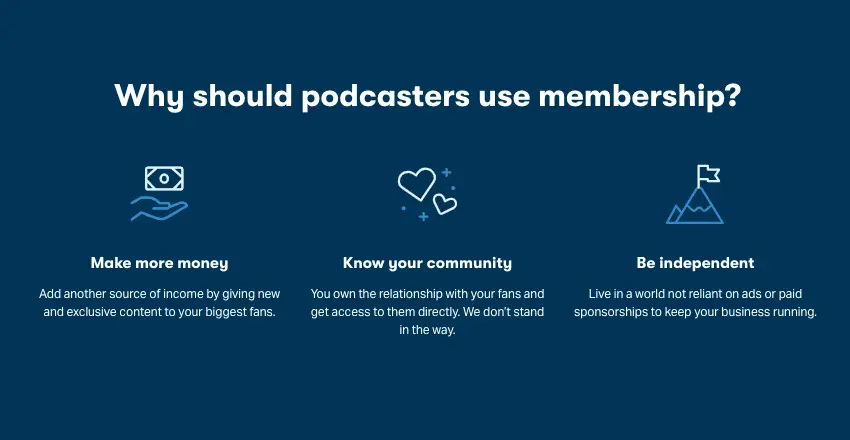
Patreon converts listeners into paying members through recurring subscriptions. Most podcasts convert one to five percent of their audience. The higher end usually requires a strong community and clear bonus content.
A show with 10,000 monthly listeners and a three-percent conversion at five dollars per month earns roughly 1,500 dollars per month before fees. That math is useful before deciding whether Patreon fits the show.
The honest math also matters. Most shows treat Patreon as one stream of several rather than a stand-alone income, alongside sponsorships and other listener-funded models.
It Builds a Community Layer Around the Show
Patreon also creates a space for the most engaged listeners. The community layer is often the most durable part of the model, more than any single bonus.
Shows that treat Patreon as just a paywall tend to lose patrons quickly. Shows that treat it as a small clubhouse retain them for years.
Discord communities have become the de facto clubhouse for many podcast Patreons. The shows that lean into the community angle usually retain patrons far longer than the shows that treat Patreon as just a paywall.
Setting Up Tiers Without Overcomplicating It
Tier design is where many podcast Patreons fall apart. Two or three tiers almost always beat seven.
Two or Three Tiers Cover Most Shows
A simple structure works best. One affordable tier at three to five dollars per month. One main tier at five to ten dollars. An optional top tier at fifteen to twenty-five dollars. Most patrons land on the middle tier.
More tiers add decision fatigue without raising revenue much. Test a simple structure first and add complexity only if you find evidence it earns more.
Adding too many tiers creates a real cost. Designers and patrons spend cognitive energy on a menu rather than the show itself. Three tiers is the sweet spot for almost every podcast we work with.
Price Anchored to the Bonus Content
The price should reflect the bonus content. If the bonus is one extra episode a month, five dollars is fair. If it is a weekly bonus plus a Discord, ten dollars is fair.
Pricing higher than the value earns short-term revenue and long-term churn. Patrons leave quickly when the bonus feels thin.
Re-pricing later is harder than getting it right the first time. Existing patrons keep their original price, and new ones see the new one. Disparities at the edges create awkward conversations a year in.
Listeners are also surprisingly price-aware. Most podcast Patreons price the main tier at five dollars per month because that is what listeners have come to expect. Going much higher needs unusual value to justify it.
Some shows skip listener tiers altogether and fund the production through the best branded podcasts sponsorship model instead. The choice is mostly about which audience you actually have.
Bonus Content That Does Not Double Your Workload
The biggest risk of running a Patreon is burning out the host on extra content. The model only works if the bonuses are sustainable.
Repurpose Before You Create New
The cheapest bonus content is content you would have made anyway. Extended cuts, uncut interviews, behind-the-scenes audio, and rough notes from research all qualify.
These bonuses cost almost nothing extra to produce. They feel valuable because they are honest insider material, not a manufactured premium product.
Even rough behind-the-scenes audio works well. Patrons want the inside view, not a polished alternative product. The lower the production bar on bonus content, the more honest it usually feels.
Video bonus content also works for some shows. The decision is worth thinking through carefully, and our notes on audio vs video podcasting in 2026 cover where the extra work pays off.
Ad-Free Feeds Are a Strong Default
Many shows offer an ad-free version of the main feed as a tier benefit. It produces no extra work for the host, and listeners are willing to pay to skip ads.
Most podcast hosting platforms support private ad-free feeds with a few clicks. It is one of the easiest bonuses to run.
Setup is usually a single switch in the hosting dashboard. Patrons authenticate, get a private feed, and listen without changing apps. The friction is low enough to be worth offering.
We also recommend testing the ad-free feed before charging for it. A friendly tier of early supporters can confirm the feed works across apps before you make it a paid promise.
Building the Patreon Habit
Patreon revenue compounds when the host mentions it consistently. The shows that earn the most treat it as part of the show’s normal cadence.
Mention It Briefly Every Episode
A short mention of Patreon in every episode, somewhere between fifteen and thirty seconds, outperforms occasional long pitches. The repetition is what converts.
Make the mention specific. Name one current bonus, not the whole tier structure. Listeners convert better on a specific reason to join than on a list.
Mentions also work better with a specific outcome. Instead of pitching the whole tier, name the next bonus episode coming this week. A specific reason to join converts far better than a list of features.
Thank Patrons in the Show
Reading patron names in the credits feels small, but it carries weight. It also encourages other listeners to join in order to be named.
Treat the thanks as part of the production, not an afterthought. The patrons who feel seen are the ones who stay for years.
Patron acknowledgement also makes the community visible to new listeners. Hearing real names in the credits demonstrates that other people pay, which makes paying feel normal rather than awkward.
Thank-you mentions also work better grouped than spread across episodes. Reading ten patron names at the end of one episode lands better than scattering names through the rest of the season.
Common Patreon Pitfalls That Quietly Burn It Out
A few patterns kill podcast Patreons. They are all preventable.
Promising More Than You Can Deliver
Many shows launch with ambitious tier promises and then struggle to keep up. Late bonuses kill churn faster than any other single problem.
Promise less than you think you can deliver. Surprise patrons with extra later, rather than apologising for missing promises.
We have watched too many shows ship a ‘monthly behind-the-scenes’ bonus that they could actually deliver only every six weeks. The drift is silent at first and corrosive over time. Pace the bonuses to your real capacity.
We see this often enough that it has become a planning rule. Promise the smallest version of the bonus you can deliver consistently, and add to it as the cadence proves itself.
Treating Patreon as the Only Revenue Stream
Patreon almost never funds a full operation on its own. It works best as one of two or three revenue streams. Our guide to podcast revenue strategies covers the mix that usually works.
Shows that rely on Patreon alone tend to burn out the host trying to grow it fast enough to live on.
For a wider view of what to add alongside Patreon, our guide to podcast marketing for business is a useful next stop. It covers the supporting channels that make membership growth easier.
How to Launch a Podcast Patreon Without Wasting Effort
A clean launch saves months of churn. A few habits make the difference.
Plan Before You Launch the Page
Before opening Patreon, decide the tiers, the bonuses, and the mention plan. A short podcast readiness assessment can also flag whether your show has the community Patreon actually needs.
Launching without those decisions usually produces a Patreon that earns under expectations and burns out the host within a year.
A practical rule: launch with fewer tiers and fewer bonuses than you think you can deliver. Add complexity once you understand who your patrons actually are. Most early tier designs are guesses.
Run It Like a Real Channel, Not an Afterthought
Patreon is part of the marketing plan, not separate from it. Our podcast marketing services treat membership growth as part of the show’s overall growth strategy.
The shows that earn the most from Patreon run it like a small, ongoing product. The patrons get steady value, and the host gets steady revenue.
Treating Patreon as part of the show, rather than a side project, also keeps expectations honest with patrons. The relationship feels less transactional when the membership is woven into the regular cadence.
A small annual review of the tiers also helps. The patron base, the show’s costs, and the available bonuses all shift over time. A yearly check keeps the membership in step with the show’s reality.
Patreon Earns Its Keep When the Show Has a Community
Patreon works best for podcasts with a real community, simple tiers, and bonus content the host can sustain. Most shows do not need ten tiers or a daily bonus. They need a clear membership offer mentioned consistently, and patrons treated like the small clubhouse they are.
If you want help planning a Patreon that actually earns, book a podcast strategy call with our team.
For the wider growth picture, our guide to marketing your podcast covers the supporting channels that make membership growth easier.
Most shows that succeed on Patreon also started small and added complexity later. The early version was usually two tiers, one bonus, and a steady mention pattern. The growth followed the discipline, not the other way around. That discipline, more than the platform itself, is what makes the model sustainable.

Colby Schemm
As a Content Specialist at Resonate Recordings, Colby creates & curates content on social media, & consults with clients to improve their podcast marketing strategies. Colby is from Roanoke, VA & now lives in Louisville, KY.