



There are over 100 million search results for “best podcast microphone.” Most of them were not written by anyone who has actually recorded a podcast with the microphones they’re recommending.
We ran into this firsthand years ago. A well-known podcaster with a large, trusted audience recommended a microphone in a widely shared article. When we asked what he liked about it, his answer was blunt: he had never used it. He wrote the recommendation based on other people’s reviews.
Your microphone is the single most important piece of your recording setup no matter if you are running a solo podcast or you are a full-service podcast production agency. Every podcaster needs one, and the guide you trust to help you pick it should come from people who have actually plugged these mics in, recorded real voices, and listened critically to the results. That is what this guide is. Every mic below has been tested in real recording sessions by our audio engineers, not assembled from other people’s spec sheets.
This is also the most complete version of this guide we have ever published. Beyond microphones, it now covers headphones, portable recorders, the accessories that actually matter, gift ideas for the podcaster in your life, and a dedicated section for anyone recording sermons or house of worship audio. If you came here looking for one piece of gear, use the table of contents. If you’re building a full kit, read straight through.
How to Choose the Right Podcast Microphone
Podcast microphones are not one-size-fits-all. Different voices sound different on different mics, and the room you’re recording in matters as much as the mic itself. If you can, test a few microphones before committing. Here’s what actually matters when you’re comparing options.
Microphone type. Dynamic microphones are what we recommend to most podcasters. They pick up the least amount of background and room noise, which matters because most people are not recording in a treated studio. A spare bedroom, closet, or home office works fine with a dynamic mic. Condenser microphones offer higher sensitivity and more detail, but that sensitivity means they pick up everything in the room, including your air conditioner, your keyboard, and the neighbor’s dog. Use a condenser mic only if you have a truly quiet, treated space.
Polar pattern. This describes the shape of the area where a mic picks up sound. Most podcast mics are cardioid, meaning they capture sound from directly in front of the mic and reject sound from behind and to the sides. This is ideal for a podcast setup where each speaker has their own mic and you want to minimize bleed between them.
Connector type. USB mics plug straight into your computer and work with almost any recording software, including Zencastr, Riverside, and Zoom. XLR mics need an audio interface or a recorder like the Zoom H6essential in between the mic and your computer, but they generally deliver better sound quality and more flexibility if you ever want to upgrade your setup. Some mics, like the RODE PodMic USB, offer both connections in one microphone.
We have tested and encountered some of these microphones when we do B2B Podcasting. Now let’s get into the picks.
Microphone Comparison Table: Every Pick at a Glance
| Microphone | Type | Price | Buy If | Avoid If |
|---|---|---|---|---|
| RODE PodMic USB | Dynamic, USB/XLR | $99 | You want one mic that works now and still works if you upgrade your interface later | You need onboard DSP or voice processing built in |
| Shure MV7+ | Dynamic, USB-C/XLR | $279 | You want built-in auto-leveling and noise gating without touching software | You’re on a strict beginner budget |
| Samson Q2U | Dynamic, USB/XLR | $69 | You want the cheapest mic that still sounds professional | You want onboard processing or a premium build |
| Electro-Voice RE320 | Dynamic, XLR | $299 | You want the best dynamic mic under $300, full stop | You don’t already own an audio interface or recorder |
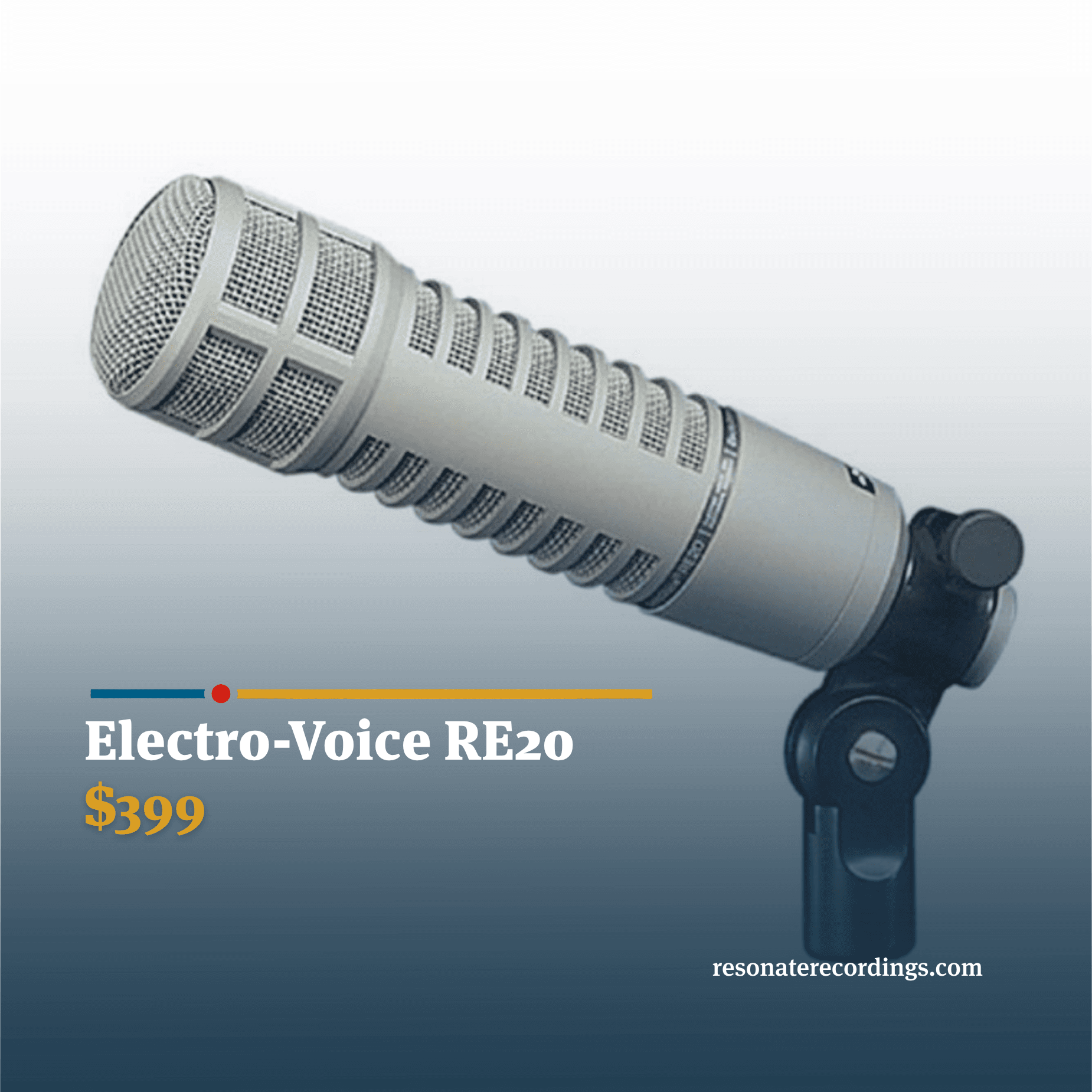
| Electro-Voice RE20 | Dynamic, XLR | $399 | You want the broadcast standard trusted by NPR and ESPN engineers | Budget is the deciding factor |
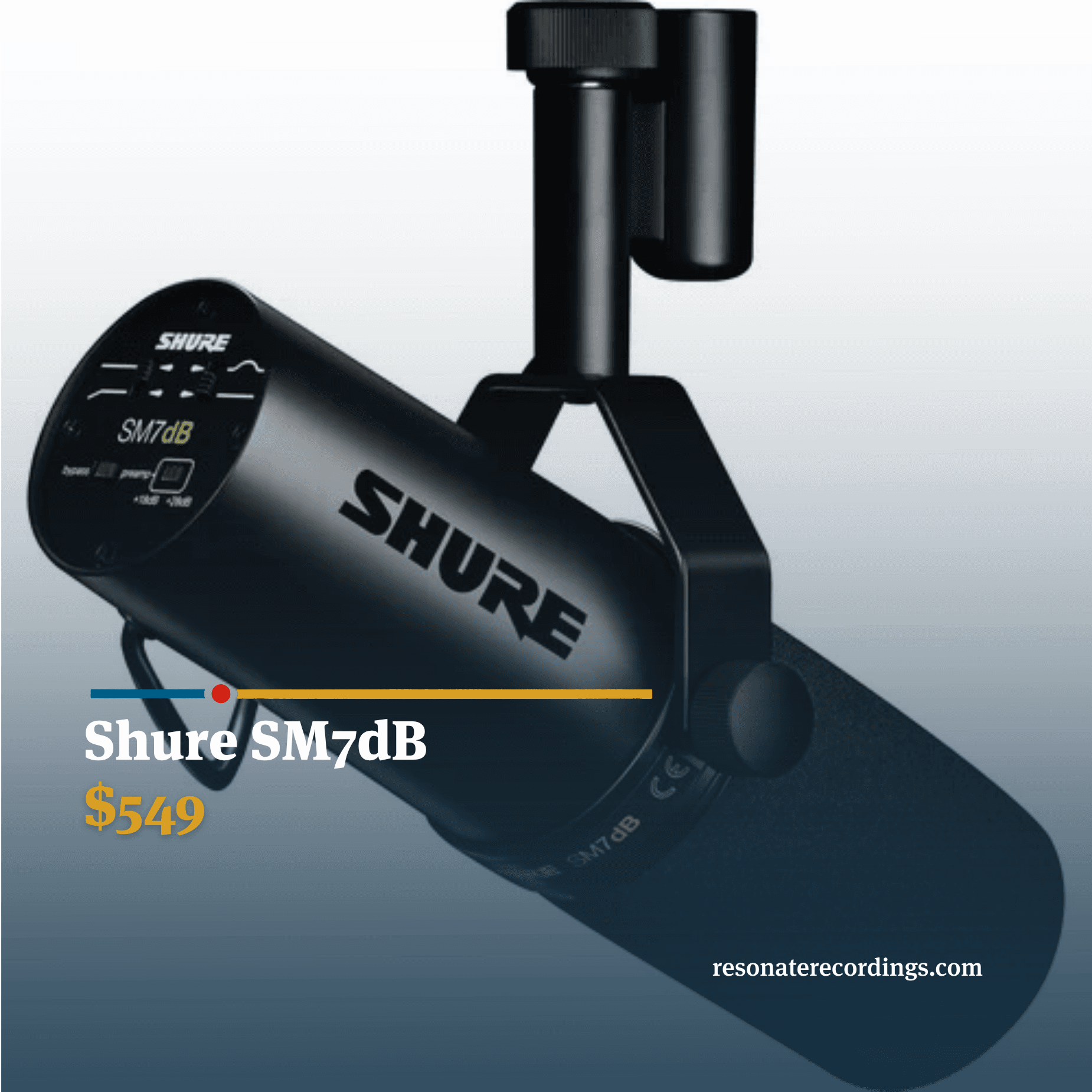
| Shure SM7dB | Dynamic, XLR | $549 | You want the iconic SM7B tone with a built-in preamp, no Cloudlifter needed | You’re not ready to spend over $500 on a mic alone |
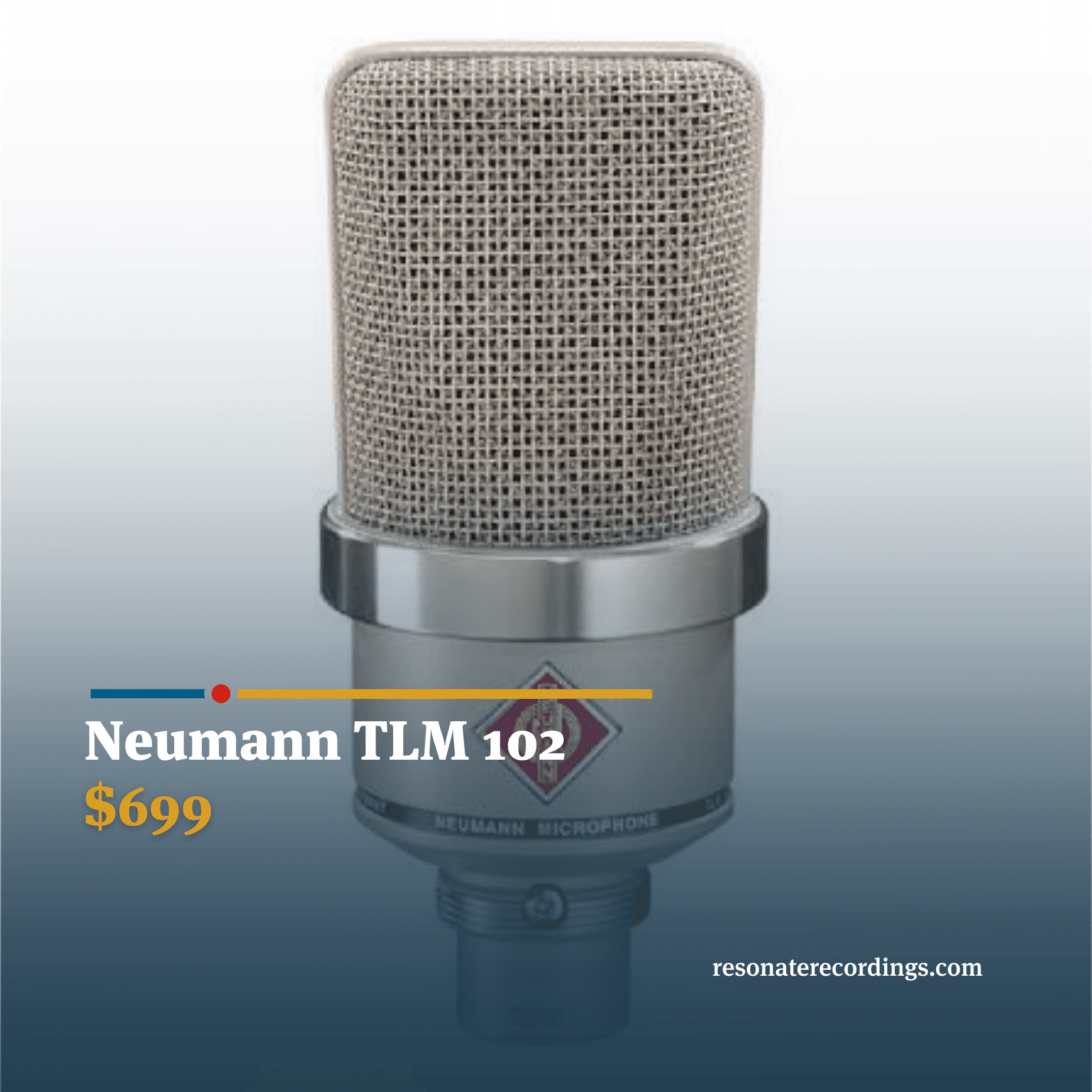
| Neumann TLM 102 | Condenser, XLR | $699 | You have a treated room and want studio-grade detail | You record in an untreated room or shared space |
| Mojave MA-200 | Tube Condenser, XLR | $1,095 | You’re recording voiceover or narrative-style content in a treated space | You need a mic that works well on both male and female voices equally out of the box |
Best USB Microphones for Podcasting
USB microphones plug straight into your computer’s USB port and record directly into almost any application. Most of our clients use USB mics for remote recording through Zencastr, Riverside, Squadcast, and Zoom. With Shure, RODE, and Samson all shipping current-generation USB mics built specifically for podcasting, here’s where the category actually stands in 2026.
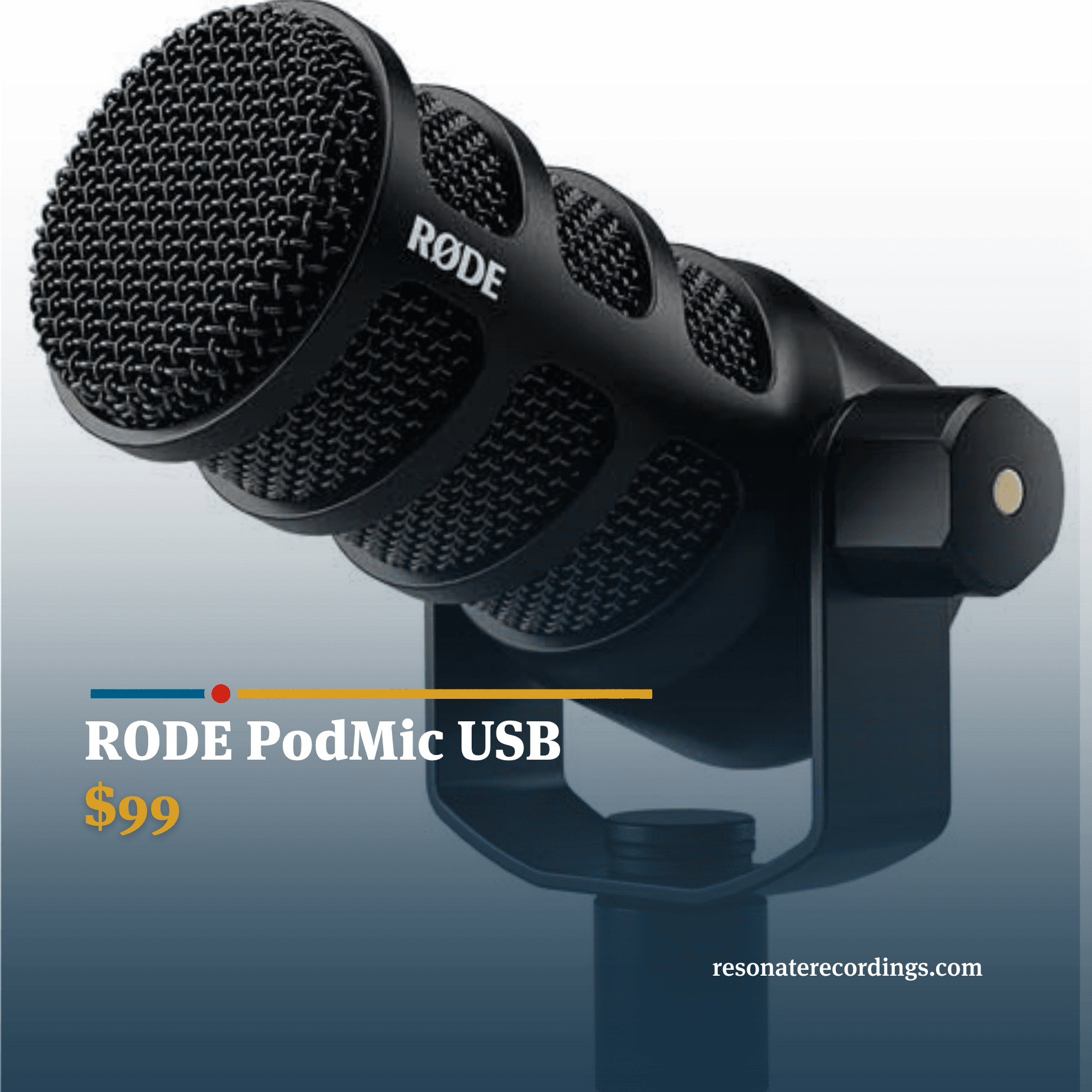
1. RODE PodMic USB — $99
The PodMic USB is the mic we point most new podcasters toward first. It’s a dynamic capsule with both USB-C and XLR outputs, so you can start on USB and move to an XLR interface later without buying a second mic. The internal shock mounting cuts down on desk knocks and cable handling noise, which matters more than most beginners expect. Buy if you want one mic that grows with your setup. Avoid if you specifically want onboard voice processing, since the PodMic USB keeps things simple by design.
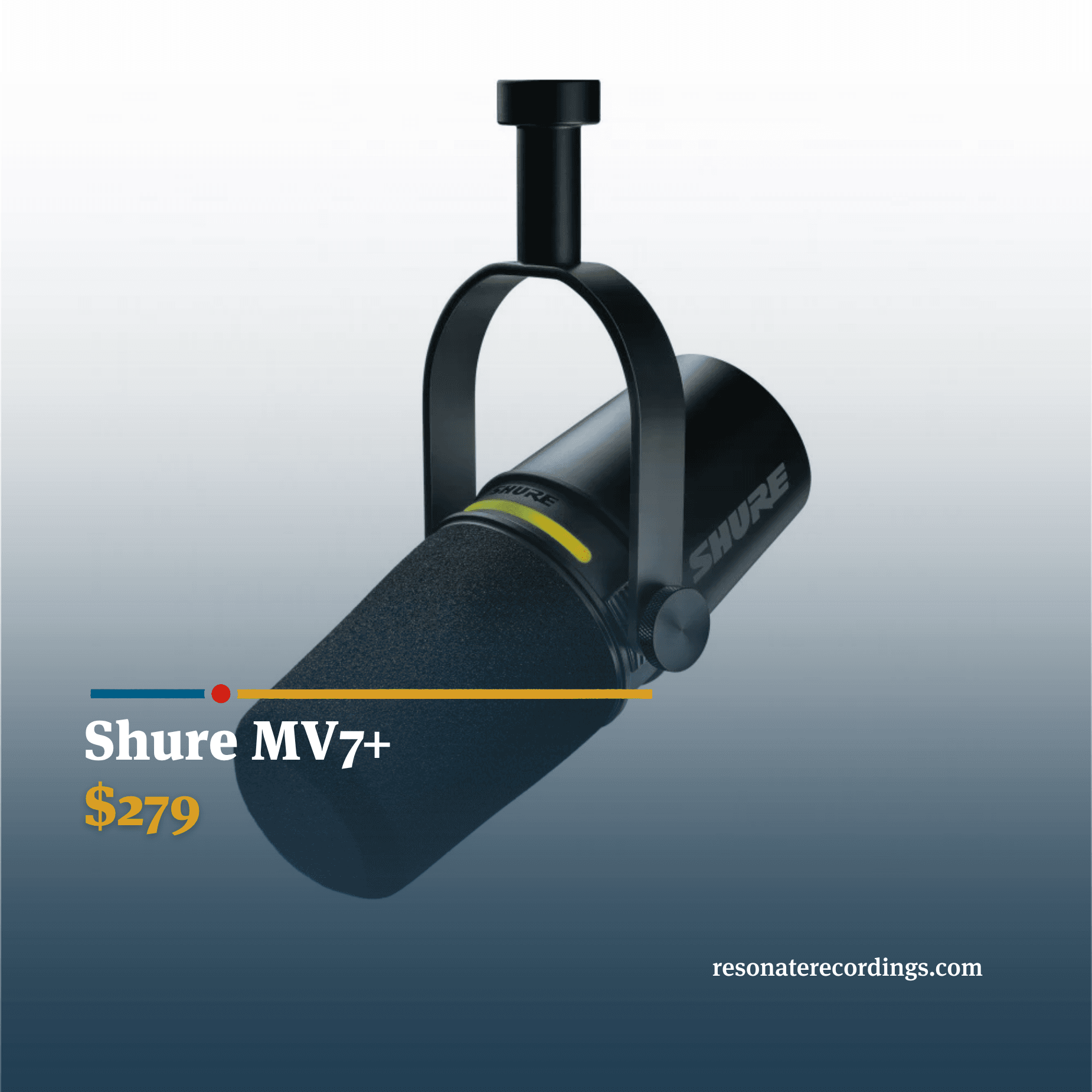
2. Shure MV7+ — $279
The MV7+ has become the default recommendation across most current podcasting gear guides, and for good reason. It’s a dynamic USB-C/XLR hybrid with built-in auto-leveling, noise gating, and a mic mute touch panel, all processed onboard so you don’t need a mixer or plugins to sound clean. Buy if you want broadcast-quality processing without learning audio software. Avoid if you’re working with a strict beginner budget, since $279 is a meaningful step up from the entry tier.
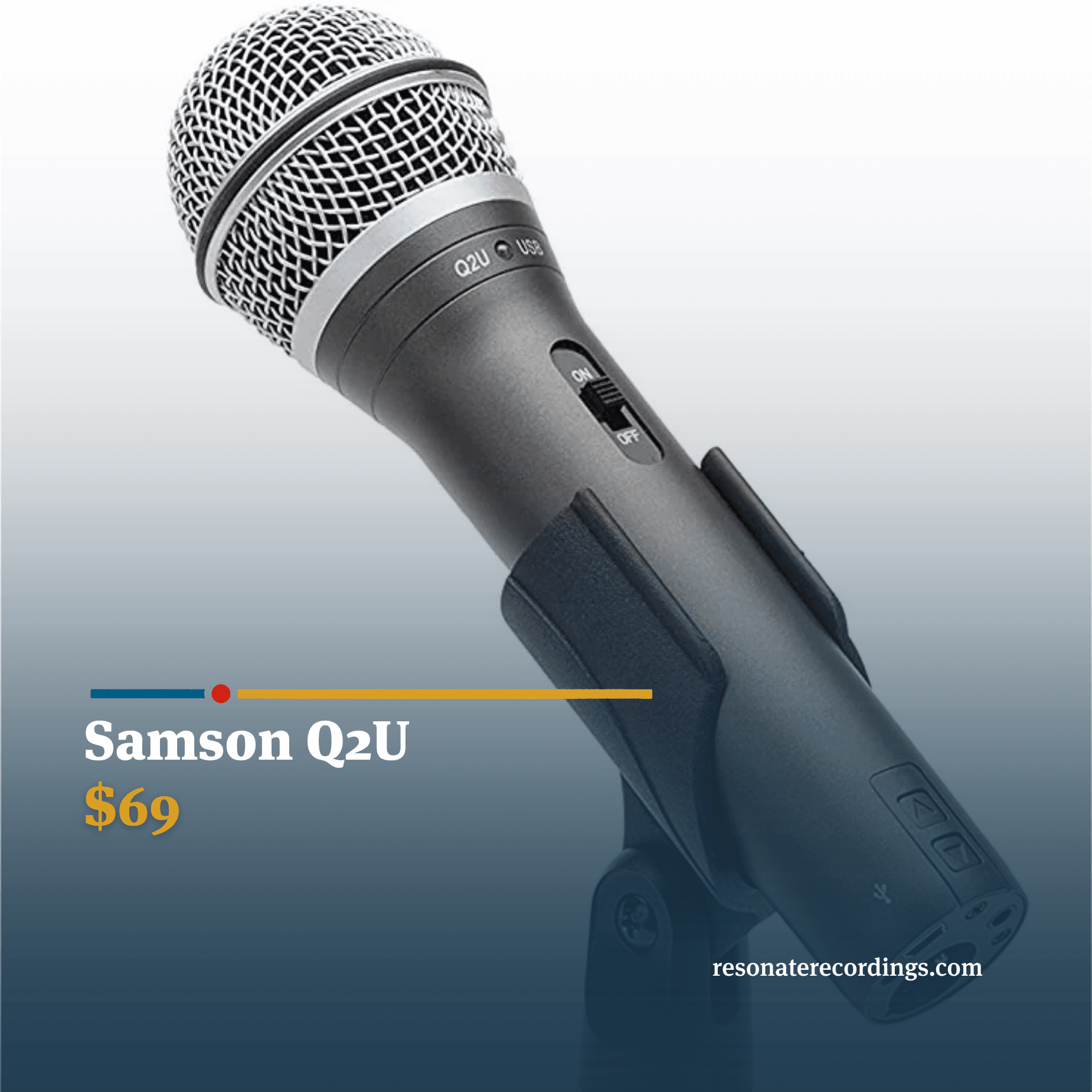
3. Samson Q2U — $69
Still the most affordable USB mic worth buying. Like the pricier options above, it offers both USB and XLR connectivity, along with a handy on/off switch and status light. The sound quality punches well above its price point, and the XLR output means you can pair it with a Zoom H6essential later for on-the-go recording. Buy if price is the deciding factor and you still want a mic that sounds professional. Avoid if you want a premium build or onboard processing.
Best Dynamic XLR Microphones for Podcasting
Dynamic microphones are the right call for most podcasters, whether you’re running them through a USB adapter or a full audio interface. They pick up less of the room noise that distracts listeners, and quality options start under $100.
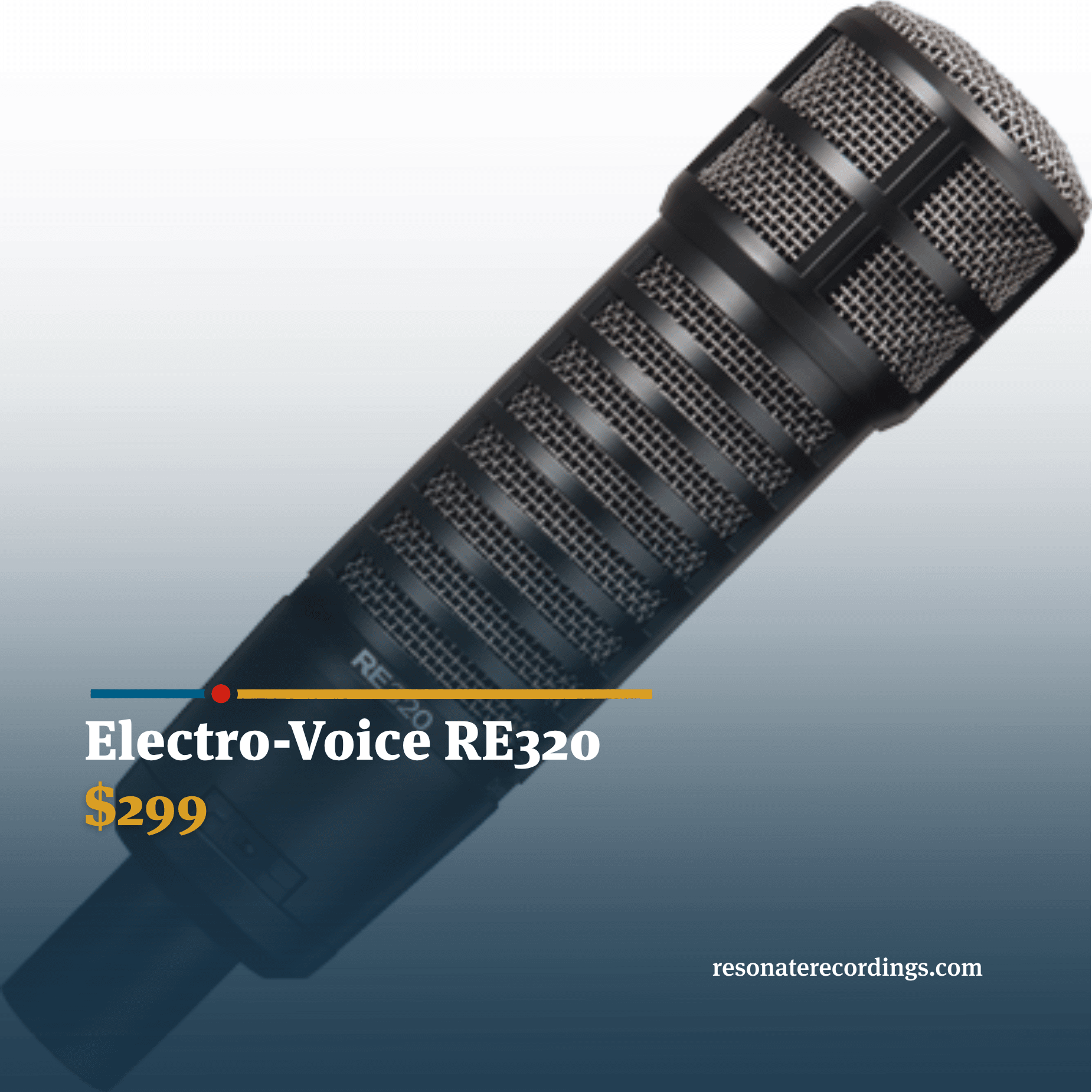
1. Electro-Voice RE320 — $299
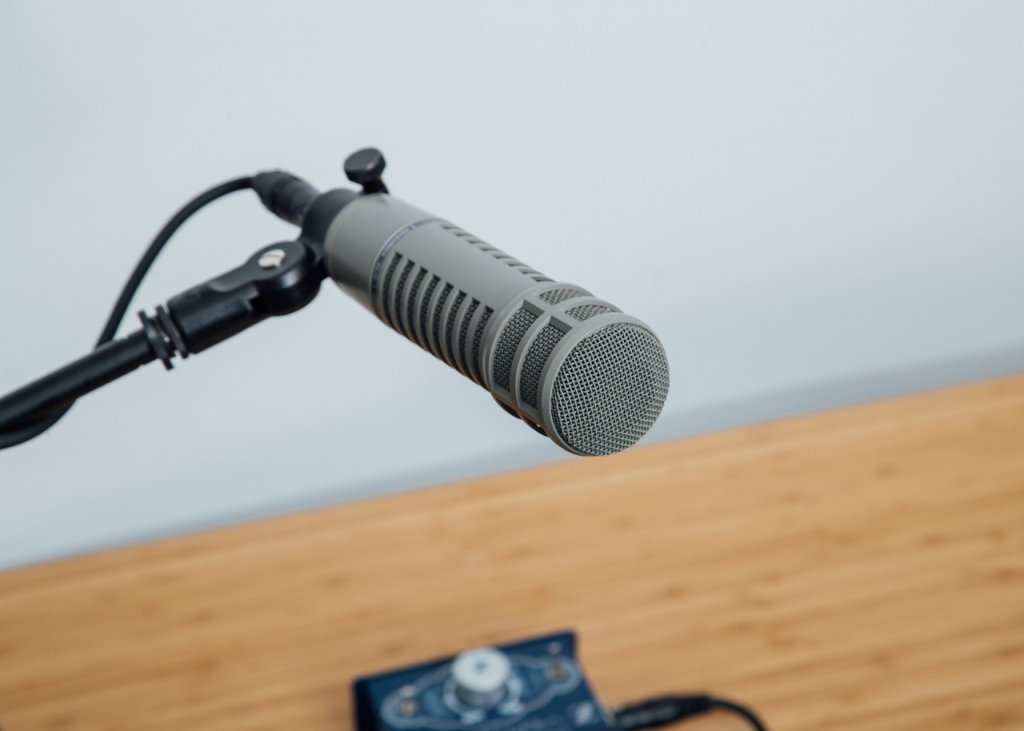
This is one of our favorite podcast microphones at any price. The RE320 is a professional-grade dynamic mic built for low-noise vocal recording, and it delivers a natural, pleasing tone without the price tag of its broadcast-legend sibling below. Its supercardioid pattern isolates your voice while rejecting background noise from behind the mic. If you only have $300 to spend on a microphone, this is where it goes.
2. Electro-Voice RE20 — $399
The legendary RE20 has been used by broadcasters and podcasters at NPR, ESPN, and countless narrative shows. Its patented Variable D technology controls the low-frequency proximity effect that normally builds up as you get closer to a mic
3. Shure SM7dB — $549
The SM7dB takes the legendary SM7B tone, the mic behind Joe Rogan’s show and countless others, and adds a built-in low-noise preamp. That solves the SM7B’s biggest weakness: notoriously low output that usually requires a separate Cloudlifter to sound right. With the SM7dB, you get the iconic warm, transparent tone with a switchable +18dB or +28dB boost built in, so it plugs straight into most interfaces without extra gear.
Best Condenser Microphones for Podcasting
Condenser microphones capture incredible detail, but they need a truly quiet or sound-treated space to shine, because their sensitivity picks up far more room noise than a dynamic mic. These picks are for podcasters with a dedicated, treated recording space who want the highest possible fidelity.
1. Neumann TLM 102 — $699
A consistent, no-nonsense condenser that just works. It captures the source and room ambiance without unwanted coloration, with a streamlined design and flat frequency response that gives you flexibility in post-production. This is the mic to reach for once your room is treated and your budget allows it.
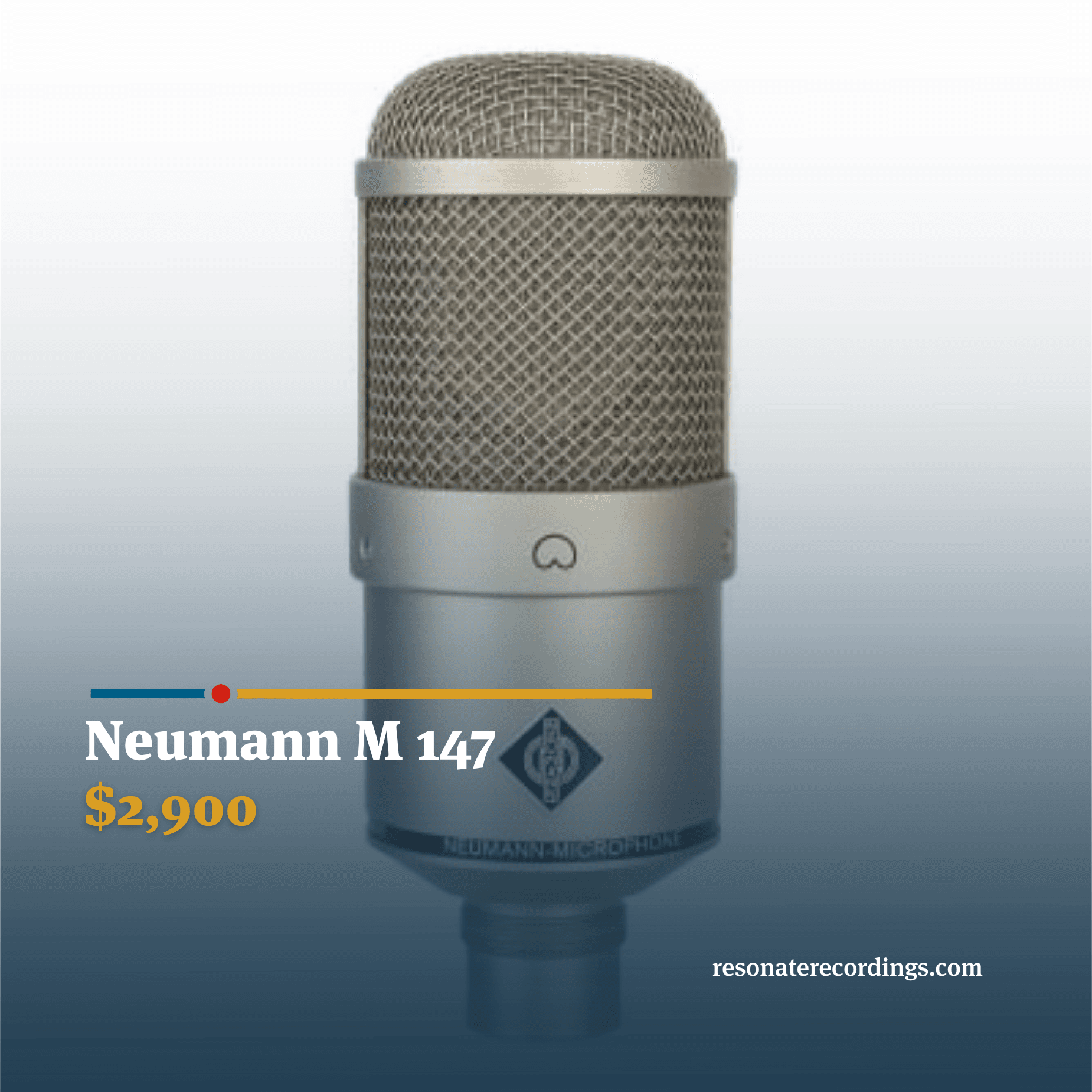
2. Mojave MA-200 — $1,095
This tube condenser avoids the shrillness and high-frequency distortion that plagues a lot of modern condensers. In our testing, it performed better on female voiceover than male, and it’s the mic we use to record voiceover for one of our narrative podcast clients. Best suited for voiceover and narrative content rather than a two-host conversational format.
Popular mics we don’t recommend: the Blue Yeti, Rode Procaster, Heil PR-40, Blue Snowball, and Shure MV51 are not bad microphones, but our engineers consistently find better options at every price point above. You’ll have better luck with any of the picks above than with these.
Best Podcast Headphones
Most headphone guides rank by price and stop there. That misses the real question: which headphones win for recording, which win for mixing, and which win for the six-hour edit session. Headphones do not have one job. They have three, and the pair that wins one often loses another.
Recording monitoring needs closed-back isolation and a flat enough response that you can trust what you hear while tracking. Latency has to be zero, which rules out Bluetooth entirely. Mixing and review rewards a slight bass and treble emphasis that surfaces vocal-band detail and edit points a perfectly flat headphone can hide. Long-session comfort is its own category once your weekly recording time crosses four hours: clamping force and earpad material start to matter more than sound quality.
| Job | Top Pick | Budget Pick |
|---|---|---|
| Recording monitoring | Sony MDR-7506 ($100) | Audio-Technica M40x ($80) |
| Mixing and review | Beyerdynamic DT 770 Pro 80Ω ($170) | Sennheiser HD 280 Pro ($100) |
| Long-session comfort | Audio-Technica ATH-M50x ($150) | Beyerdynamic DT 770 Pro ($170) |
The honest verdict most headphone guides won’t give you: audio engineers who mix podcasts every day often use $100 headphones, not $1,000 ones. Past the $500 mark, podcast use shows diminishing returns, because compressed playback on a listener’s phone is the real bottleneck, not your headphone’s resolving power. Spend the difference on your microphone or your recording room instead.
For the full three-jobs framework, the anti-patterns to avoid (DJ headphones, open-back mics during tracking, Bluetooth latency), and detailed verdicts on all five picks, see our complete guide to the best studio headphones for podcasting.
Best Portable Recorder: Zoom H6essential
If you record on location, run in-person interviews, or need to capture multiple guests without a full studio setup, a handheld multi-track recorder solves problems a USB mic can’t. The original Zoom H6 has been replaced by the Zoom H6essential (around $399), and the upgrade is real, not cosmetic.
The H6essential records up to six tracks of 32-bit float audio, which is the single biggest change from the original H6. 32-bit float recording means you effectively cannot clip your audio no matter how loud your guest gets, which removes one of the most common on-location recording mistakes. It has four XLR/TRS combo inputs with independent phantom power, so you can run up to four dynamic or condenser mics simultaneously, plus the built-in X/Y stereo capsule for ambient or two-person setups. It also functions as a USB-C audio interface, so the same device that handles field recording can sit on your desk and replace a standalone interface.
Buy if you need to record more than one XLR mic away from your desk, whether that’s a live event, an in-person interview, or a multi-guest sermon or panel setup. Avoid if you only ever record solo at a desk, where a simpler USB mic and your computer will do the job for less money and less complexity.
Recording Accessories You Actually Need
A great microphone with the wrong accessories still sounds amateur. These are the pieces worth buying, not the ones marketing wants to sell you.
Mic Stand or Boom Arm
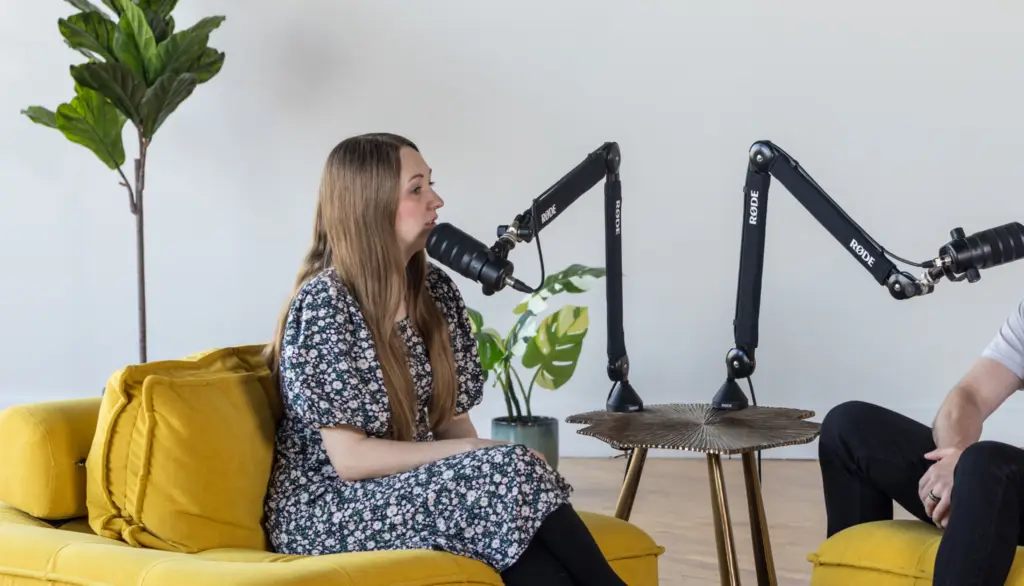
A stand with a boom arm keeps your mic isolated from desk vibrations and typing noise that a tabletop stand transmits straight into your recording. It also lets you and your guests adjust the mic to a comfortable speaking distance without leaning awkwardly toward a fixed position.
Pop Filter or Windscreen
A cheap and essential fix for the plosive “p” and “b” sounds that create audible bursts of air on a recording. If you’re using a USB or XLR mic without built-in pop protection, this is a five-to-fifteen-dollar accessory that solves a problem you’ll otherwise spend hours trying to fix in post-production.
Cloudlifter Microphone Activator
Most dynamic microphones, especially the Shure SM7B, have relatively low gain output. A Cloudlifter adds up to 25 dB of clean gain and can make a budget audio interface sound noticeably better. If you’re running an SM7B without the built-in preamp of the SM7dB, this is not optional.
Microphone Shock Mount
Shock mounts suspend your mic using bungee-style cords that prevent it from physically touching the stand, which stops vibrations and bumps from resonating straight into your recording. Most shock mounts are model-specific, so buy one built for your exact mic.
Great Podcaster Gift Ideas
If you’re shopping for a podcaster rather than outfitting your own setup, these accessories double as some of the most useful gifts we’ve seen podcasters actually use. A quality pop filter, a Cloudlifter, a set of Sony MDR-7506 headphones, or a portable recorder like the Zoom H6essential all solve a real problem rather than sitting in a drawer. For anyone just starting out, a bundle of the RODE PodMic USB with a boom arm and pop filter is a complete starter kit in one gift.
Recording Sermons and House of Worship Audio
Recording a sermon or service audio has different demands than a two-person podcast, and gear built for a desk setup often falls short in a sanctuary or auditorium.
For the pulpit or lectern, a dynamic mic like the Electro-Voice RE320 or Shure SM7dB handles the natural variation in a speaker’s volume and projection far better than a condenser, which will pick up HVAC noise, room echo, and congregation sound. For a pastor or speaker who moves around, a wireless lavalier or headset system is worth the investment over a fixed mic, since it maintains consistent distance and level regardless of movement.
For multi-source recording, a portable multi-track recorder like the Zoom H6essential is the practical answer. With four XLR inputs, you can run a pulpit mic, a wireless receiver, and two additional inputs for choir or musical accompaniment, all recorded to separate tracks that give your editor full control in post-production. Recording every source to its own track, rather than mixing everything live to a single stereo file, is the single biggest quality improvement most houses of worship can make to their recording setup.
The core mic recommendations in this guide apply directly to sermon and worship recording. The main difference is planning for room size and multiple sound sources rather than a single desk setup.
What Most Microphone Guides Get Wrong
Condenser mics are not automatically “better.” A lot of buying guides treat condenser mics as the upgrade path from dynamic mics. In an untreated room, a condenser mic will sound worse than a dynamic mic, not better, because it faithfully captures every bit of room noise a dynamic mic would have rejected. The room you’re recording in should decide your mic type before price does.
USB is not automatically “worse” than XLR. USB microphones have a reputation for being the beginner’s compromise. Current-generation USB mics like the Shure MV7+ and RODE PodMic USB deliver broadcast-quality sound that easily rivals XLR mics twice their price. The XLR advantage is upgrade flexibility, not automatic sound quality.
The most expensive mic in the room is rarely the right one. A $4,000 condenser microphone built for singing vocals will often sound worse on spoken-word podcast dialogue than a $300 dynamic mic, because it has a harsher high-end response that spoken voice does not need. Match the mic to the job, not the price tag.
Conclusion
Your microphone is the single most important piece of your podcasting setup, so it’s worth taking the time to match it to your budget, your voice, and your recording environment. For most first-time podcasters, a mic like the RODE PodMic USB or Shure MV7+ solves 90% of what you need. For noisy rooms, a dynamic XLR mic like the RE20 or SM7dB will always outperform a condenser. And for a properly treated studio space, the condenser picks above will capture detail nothing else on this list can match.
Selecting a microphone is a real decision in your podcasting journey, and we’re glad to help you make it. If you want to offload the editing or production of your show entirely rather than building out a full gear closet yourself, our team of professional engineers is here to help. Schedule a call and we’ll walk through what your setup actually needs.