
Podcast management for software teams, so the show ships even when the sprint slips
Your engineers have plenty to say about architecture, outages, and the odd bug that ate a week. They also have a release to hit. When the roadmap tightens, the podcast is the first thing to slide.
Our podcast management service hands the show to a producer. Your people talk, and we’ll cover the planning, the prep, and the calendar.
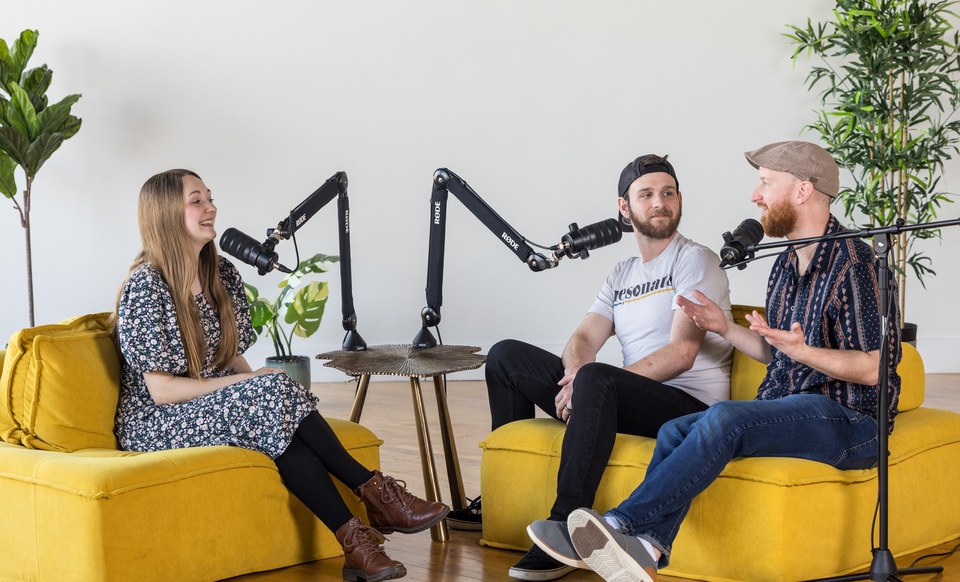
Why does a tech company’s podcast go quiet after a few episodes?
It usually starts well. Then a launch freeze, a postmortem, or a hiring sprint swallows the week. The next recording slips.
Nobody dropped it on purpose. The people with the best material are shipping product, and the show is a side project at best.
Release dates won’t wait for a podcast, and they shouldn’t. So the show needs an owner whose day job is the show.
That owner is a producer. We’ve been making podcasts since 2014. Teams often show up with great episodes and no one who has time to run them.
What does a producer change when your team is spread out?
Plenty of software people work from home at least part of the week, and that’s what the number above shows. That figure covers the whole information industry, so read it as a pattern, not a tech-only count.
No studio visit
You’ll meet your producer by video call and email. Sessions are remote, so engineers can join from their own desks.
Guests from anywhere
A guest in another time zone can join the same remote session. Your producer preps them and drafts questions that fit.
One person to ask
You don’t have to chase five people for dates. You talk to one producer, and they’ve got a full team behind them.
What does your producer handle around each recording?

A film producer doesn’t hold the camera. They make sure the shoot happens on time and the way it was planned. We do that job for your podcast.
Your producer doesn’t do the editing. That belongs to the engineers and video editors on our production team. Your producer steers them toward the cut you planned.
- Ahead of time: a season plan, outlines, guest briefings, tailored questions, and mic advice
- On the day: remote session support, live input, and every file gathered
- Afterward: guided edits, social clips, and a publishing calendar kept current
What could a software company’s show talk about?
Treat these as sparks for the first call. You’ll turn them into outlines together.
How we built it
An engineer walks through one design choice and what it cost. Your producer preps the questions so listeners outside the team can follow.
What customers keep asking
Pick a question support hears every week. Give it one episode with the person who knows the answer best.
Working remotely, honestly
Managers and new hires talk about what works and what doesn’t. Recruiters can share it with candidates, too.
Your side builds the guest list. Want a show aimed at buyers? Our B2B SaaS podcast production page covers that angle.
Where does your producer stop and your team start?
You keep the voice and the technical judgment. We carry the logistics.
| The work | Your producer | Your team |
|---|---|---|
| Topics | Shapes a plan from your goals | Choose what the company wants to say |
| Guests | Writes questions for each one | Make the invitations |
| Recording | Runs point on the session and files | Join and talk shop |
| Editing | Briefs the engineers on the intended cut | Listen and flag changes |
| Publishing | Holds the calendar steady | Give the final yes |
How does a tech team get started with a producer?
Meet your producer
Kick off with a video call. Talk through the company, the goals, and the show you picture.
Pick what you need
Choose which pieces to hand off, anywhere from planning to publishing.
Work together
Map out episodes, brief guests, and record with your producer there.
Grow your show
Publish on a regular beat, check how it’s landing, and adjust the plan.
A show that’s live but stuck? Your producer begins with how your team works today, then picks up what you’re ready to let go. See the whole flow on our client process page.
How much of the show should your team hand off?
The same crew works on every plan. What varies is how much of the load you pass along.
Self Service
Buy only the help you want, order by order.
- Pick only the pieces you want
- No monthly commitment
- Chat support
Subscription
Have a producer run the show alongside you.
- A dedicated producer
- Audio and video edits, marketing included
- One, two, or four episodes each month
Running more than one show? We scope Custom Packages on a call, and you’ll get a plan that fits. Starting from scratch? The podcast launch program comes first, with strategy, branding, and early episodes. Want numbers before a call? That’s fine. Try the cost calculator.
Questions software teams ask about podcast management
What does podcast management cover for a software company?
You get a producer. They outline episodes, brief guests, sit in on recordings, steer the edit, and hold the release calendar. Subscriptions can add podcast marketing as well.
Do our engineers need to travel to a studio?
No. Everything’s online. Your producer joins from wherever you and your guests are. Before the first session, they’ll suggest gear that fits each setup.
Can people on our team record from different cities?
Your producer can join remote sessions with people in different places. Tell us how your team works on the first call, and we’ll plan around it.
Who checks episodes that mention unreleased features?
Your own product, security, and legal reviewers decide what can be said. Our schedule leaves them room to look.
Is the producer the one who cuts the audio?
No. That’s the job of our audio and video specialists. Your producer guides them so each cut matches your plan.
What will podcast management cost our tech company?
It depends on episode count and how much you hand off. We price subscriptions and custom packages on a call. It doesn’t take long once we know your show.
Let’s give your engineering team’s podcast a producer
Describe where the show gets stuck and who’s been keeping it alive. We’ll show you which jobs a producer could take over, and the effort involved.