

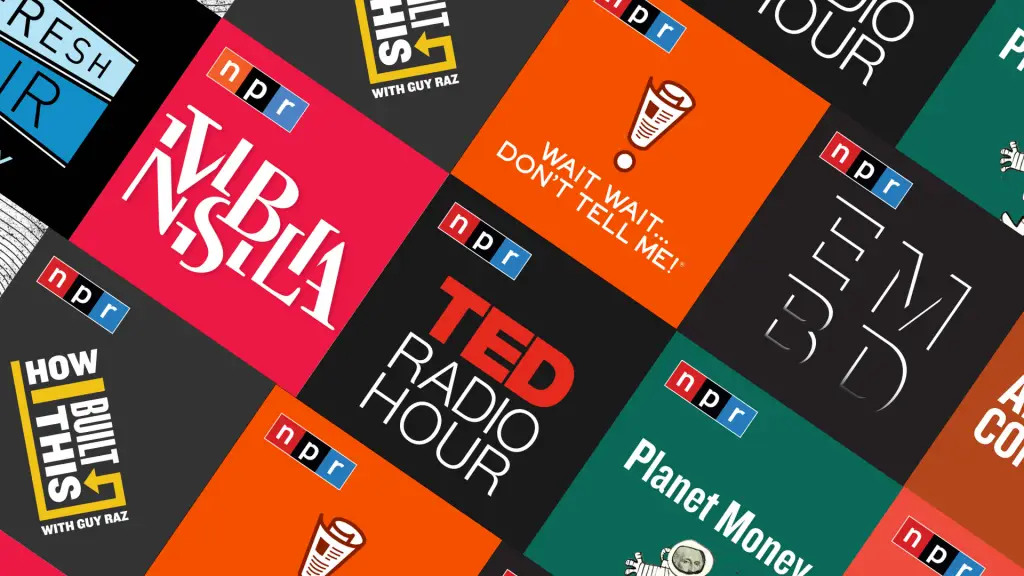


NPR means different things now. Check the label.
Many lists still credit NPR for shows that moved on. Our team, a full-service podcast production agency, likes to see who actually makes a show before recommending it.
I read ten live Apple Podcasts pages on October 12, 2026, noted the publisher of each and sorted the shows onto four shelves. The table shows time and cadence side by side.
Which of these are actually NPR shows?
Start with a check that most lists skip. Not every show with an NPR halo is published by NPR today. I opened each Apple Podcasts page on October 12, 2026 and read the publisher line.
Hidden Brain lists Shankar Vedantam as its creator, with episodes hosted by Simplecast. How I Built This lists Wondery as publisher. Both began in the NPR world, and both stay on this page as NPR alumni. I label them that way, so you know what you are following.
I call this the Halo Check. A brand name on a list is a promise about who made the show, and a list should keep it. If the publisher has changed, say so.
The other eight carry NPR in the publisher field, or in the case of Fresh Air, an NPR channel with WHYY as the producer. Those are the core of the list.
The four shelves of NPR audio
NPR’s catalog is wide, so I sort it by the job each show does. I call these the Four Shelves.
- The briefing shelf. Short, daily news to start your day. Up First and The NPR Politics Podcast sit here.
- The explainer shelf. One topic, explained with reporting and story. Planet Money, Throughline, Code Switch and TED Radio Hour sit here.
- The conversation shelf. Long talks with one guest. Fresh Air, Hidden Brain and How I Built This sit here.
- The play shelf. Fun with a news hook. Wait Wait… Don’t Tell Me! sits here.
The counterintuitive part is that the brand is not the hook. Episode length ranges from about 13 minutes to nearly two hours across these ten shows, and the listener does not pick the brand. They pick the shelf that fits the time they have.
So choose by shelf first. One show per shelf covers a week without repeating itself.
The quick comparison
| Show | Shelf | Who makes it | Typical episode on Apple | Cadence on Apple |
| Up First | Briefing | NPR | 13 to 16 minutes | Daily |
| The NPR Politics Podcast | Briefing | NPR | 18 to 34 minutes | Weekdays |
| Planet Money | Explainer | NPR | About 22 to 32 minutes | Daily |
| Throughline | Explainer | NPR | Mostly 30 to 50 minutes | Weekly |
| Code Switch | Explainer | NPR | About 25 to 37 minutes | Twice a week |
| TED Radio Hour | Explainer | NPR and TED | About 50 minutes | Weekly |
| Fresh Air | Conversation | WHYY, distributed by NPR | About 38 to 49 minutes | Daily |
| Hidden Brain (NPR alumni) | Conversation | Shankar Vedantam | About 27 minutes to 1 hour 39 minutes | Weekly |
| How I Built This (NPR alumni) | Conversation | Wondery, Guy Raz | About 41 minutes to 1 hour 31 minutes | Monday and Thursday |
| Wait Wait… Don’t Tell Me! | Play | NPR | About 47 minutes | Weekly |
Lengths and cadence were read on Apple on October 12, 2026, and they drift. Use them for rough scale.
The briefing shelf
1. Up First
Apple says Up First covers the biggest stories of the day in about 10 minutes. Leila Fadel, Steve Inskeep, Michel Martin and A Martinez host on weekdays, and Ayesha Rascoe and Scott Simon host on Saturdays.
The page counts about 1,400 episodes and a 4.6 score from 58,965 raters. Most daily episodes run 13 to 16 minutes, which makes it easy to fit in before work. Listen on Apple Podcasts.
2. The NPR Politics Podcast
Tamara Keith and Miles Parks lead this weekday show, which follows politics out of Washington and along the campaign trail, per its Apple page.
Look for roughly 2,000 episodes, a 4.4 score from 25,284 raters and short runs of 18 to 34 minutes. Listen on Apple Podcasts.
The explainer shelf
3. Planet Money
Planet Money explores the economic forces that shape everyday life, with a rotating team of hosts. Its page counts 691 episodes and a 4.6 score from 29,803 raters.
Visible episodes run about 22 to 32 minutes, and the show updates daily. NPR+ subscribers get sponsor-free listening and bonus episodes. Listen on Apple Podcasts.
4. Throughline
Ramtin Arablouei and Rund Abdelfatah use the past to explain the present. Look for about 500 episodes of 30 to 50 minutes.
It suits listeners who like a news story with its backstory attached. Listen on Apple Podcasts.
5. Code Switch
B.A. Parker and Gene Demby host conversations about race and how it affects politics, pop culture, history and food. Apple says it was named the first Show of the Year in 2020.
It counts 662 episodes with a 4.6 score from 14,660 raters, and runs about 25 to 37 minutes. Listen on Apple Podcasts.
6. TED Radio Hour
Manoush Zomorodi hosts a show that explores big questions with the help of thinkers from TED talks. NPR and TED Conferences share the copyright.
The listing counts 393 episodes and a 4.3 score from 20,955 raters. Most episodes run about 50 minutes, and the latest listed episode was originally broadcast in February 2023, so some feeds show reruns. Listen on Apple Podcasts.
The conversation shelf
7. Fresh Air
Terry Gross and Tonya Mosley host a weekday magazine from WHYY covering arts and issues with in-depth conversations. NPR distributes the feed.
The listing counts about 1,700 episodes and a 4.3 score from 35,992 raters. Recent episodes run roughly 38 to 49 minutes, and some are bonus items for NPR+ subscribers. Listen on Apple Podcasts.
8. Hidden Brain (NPR alumni)
Shankar Vedantam, a science journalist, helps listeners understand their own minds and the people around them. The page lists him as creator, with Simplecast hosting the episodes.
It shows 716 episodes, a 4.6 score from 41,721 raters and lengths from 27 minutes to 1 hour 39 minutes, updated weekly. Listen on Apple Podcasts.
9. How I Built This with Guy Raz (NPR alumni)
Guy Raz interviews well-known entrepreneurs about how they built their brands, including setbacks and lessons. Wondery is listed as publisher.
The page shows 876 episodes, a 4.7 score from 29,704 raters and new episodes on Mondays and Thursdays. Most run roughly 40 to 60 minutes. Listen on Apple Podcasts.
The play shelf
10. Wait Wait… Don’t Tell Me!
Peter Sagal and Emma Eun-joo Choi host a weekly news quiz with comedians and a celebrity guest. The page counts 457 episodes and a 4.6 score from 37,189 raters.
Regular episodes run about 47 minutes, and short bonus episodes of 11 to 16 minutes go to NPR+ subscribers. It is marked Explicit. Listen on Apple Podcasts.
NPR radio shows and NPR podcasts: what is the difference?
Searchers type npr radio shows, npr radio programs and national public radio podcasts as if they meant one thing. They do not. A radio show airs on local stations. A podcast is a feed you follow on your phone.
NPR says it is a membership organization of separately licensed and operated public radio stations. Members pay a core fee for the newsmagazines Morning Edition, All Things Considered and Weekend Edition. They pay license fees for other programs, such as Fresh Air or Here & Now.
So an NPR programs list can mean two lists. One is what your local station airs. The other is what you can play on demand. This page covers the second, and I checked each show on Apple Podcasts. For the first, check your station’s schedule.
Here is a quick way to use this page as a list of NPR podcasts. Start with the table above. Pick one show per shelf. Then look up your station for the radio version of any show that airs there.
Public radio podcasts that are not from NPR
The best public radio podcasts do not all come from NPR itself. NPR’s own 2024 podcast roundup lists 13 shows from NPR and member stations, including WBUR, KUOW, NHPR and WNYC. Its 2022 binge list credits Sidedoor to PRX and LA Made to LAist Studios.
That roundup gives no runtimes, no release schedules and no listener data. I add those here for the ten shows on this page. Use public radio podcasts from stations as a second shelf once your NPR habit is set.
Bear Brook is a good example. It comes from NHPR, a New Hampshire station, and it appears on my true crime list. A station label is a clue about who made the show, which is the same idea as the Halo Check.
How NPR is paid for, and why it matters to a listener
NPR describes itself as funded by several sources. Its public radio finances page names corporate sponsorship and fees paid by member stations as its two largest revenue sources. It also lists grants, donations and endowment income.
The same page says grants from the Corporation for Public Broadcasting and other federal agencies make up less than 1% of NPR’s annual operating budget. It gives no percentage for the other sources, because those figures are shown in charts, so I do not repeat any.
Why does this matter? Funding shapes format. A show with sponsors needs a clean place for a sponsor message. A show with listener support can offer a sponsor-free feed, which is what NPR+ does on many of these pages. When you hear a sponsor read, you know how the show pays for itself.
What NPR shows get right about production
Producers admire NPR for habits that are easy to name and hard to copy. Narration guides without crowding. Sound and music sit under the story. Interviews give the guest room.
- Pacing that respects the subject. The best episodes leave a beat before an important line.
- Editing that trusts the listener. Cuts remove clutter but keep the pause that makes a quote land.
- A fixed shape. Each show has a clear structure, so listeners know what comes next.
If you want to build a show with that discipline, careful podcast editing and a repeatable recording method matter most. Our how to record a podcast guide covers the second. To see how both fit the full budget, read the B2B podcast cost breakdown.
A company show can borrow the NPR approach without copying its tone. Pick a clear listener, keep the episode short and cut anything that does not help them. Our B2B podcast best practices guide shows how, and a production partner can run the process for you.
Who listens to news podcasts like these
These shows reach a wide range of adults. Pew’s podcasts and news fact sheet, based on an August 2025 survey, says about a third of U.S. adults turn to podcasts for news now and then. Reliance is highest under age 50 and lowest among adults 65 and older.
For a publisher, that means a news-style show can build a habit among younger adults, not only older ones. For a listener, it means your choice is normal, not niche.
A one-week NPR listening plan
If you are new to NPR audio, a simple week keeps it from feeling like homework. Monday to Friday, play Up First before work. It takes about a quarter of an hour, and it gives you the main stories.
Add one explainer on your commute twice a week. Planet Money suits the economy, Code Switch suits culture and Throughline suits the story behind the news. Save a long Fresh Air or Hidden Brain episode for a walk or a drive.
End the week with Wait Wait… Don’t Tell Me! It tests what you learned, and it is the lightest show on the list. After two weeks, drop the shelf you skipped. A short plan you follow beats a long plan you drop.
What I cannot tell you
I cannot judge the quality of reporting from a listing. Ratings measure fan scores, and an Apple page does not audit sourcing. A few details on these pages conflict, such as episode counts that differ between the About section and the episode list.
Take one show from each shelf, try a single new episode of each and keep what fits your day. Our lists of history podcasts and political podcasts use the same method.
Conclusion
A good NPR list starts by checking who makes each show. Then it matches the show to the shelf and the time you have.
Choose one show per shelf, sample a fresh episode of each and keep whichever earn a second listen. Planning your own show? Book a call to talk format.
Strategy-first. Production second. Growth always.
Sources
- Apple Podcasts, Up First from NPR (checked Oct 12, 2026)
- Apple Podcasts, The NPR Politics Podcast (checked Oct 12, 2026)
- Apple Podcasts, Planet Money (checked Oct 12, 2026)
- Apple Podcasts, Throughline (checked Oct 12, 2026)
- Apple Podcasts, Code Switch (checked Oct 12, 2026)
- Apple Podcasts, TED Radio Hour (checked Oct 12, 2026)
- Apple Podcasts, Fresh Air (checked Oct 12, 2026)
- Apple Podcasts, Hidden Brain (checked Oct 12, 2026)
- Apple Podcasts, How I Built This with Guy Raz (checked Oct 12, 2026)
- Apple Podcasts, Wait Wait… Don’t Tell Me! (checked Oct 12, 2026)
- NPR, Public radio finances (checked Oct 12, 2026)
- Pew Research Center, Podcasts and News Fact Sheet (survey Aug 18 to 24, 2025) (checked Oct 12, 2026)