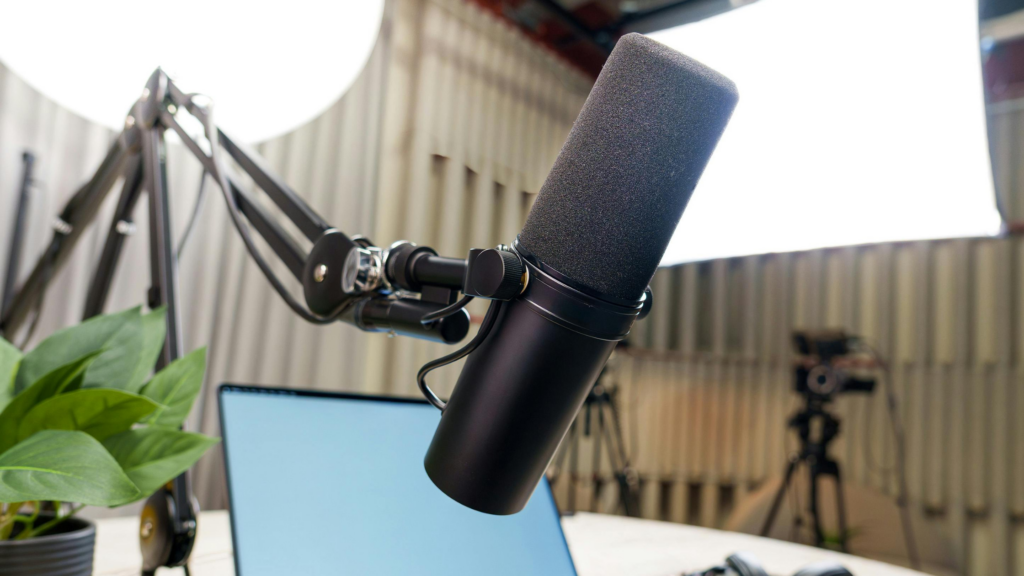





Podcasting rewards the patient.
We Are Telling You Not to Buy From Us Yet
The most useful thing we can publish is an honest answer to “should I even do this.” So here it is. Credit where it’s due: this whole argument started with something Lindsay on our sales team said on a call, when she told a prospect flat out to walk away if they needed pipeline in 60 days. That line stuck with us.
If you need instant results, don’t start a podcast. Podcasting builds trust, and trust takes time. There is no hack that compresses that into a quarter. If your board wants a number on a slide by Q1, buy ads. That is what ads are good at.
I get some version of this question almost every week from a founder who wants to know why their show hasn’t “worked” yet after six weeks. Usually the answer is that six weeks was never enough time to judge it. We have produced shows for over 3,000 companies in the past eleven years, and the ones that make it share one trait: they committed to the process before they saw a single result.
What This Isn’t
This isn’t a how-to. It won’t cover download benchmarks, microphone picks, hosting platforms, or how to write show notes. Plenty of other posts do that.
It answers one question. Should you spend the money, and when does it pay off?
Why a Podcast Is Not a Campaign
Paid search and paid social give you a fast signal. Launch Monday, get clicks by Wednesday, read cost-per-lead in two weeks.
But every dollar you spend on paid media disappears the moment you stop spending. The ad stops. The impressions stop. The leads stop. You were renting attention, not building something you keep.
A podcast works the opposite way. Episodes stay indexed. Guests keep sharing them. Listeners find episode 40 a year after it published. A podcast is one of the only marketing channels where the asset gets more valuable the longer it sits there. That is also exactly why it makes a terrible quarterly bet. You cannot put appreciation on a 90-day dashboard. It compounds slowly, then all at once.
There is a catch most people miss, though. A podcast is top of funnel. Growing an audience is only half the job. You still need a pipeline that turns listeners into leads, and we see companies skip that part constantly. It gets its own section below.
Explore what a B2B podcast actually looks like once it is built right, including the systems most founders forget to plan for.
The Infrastructure Test
Before you spend a dollar, answer these three questions honestly.
- Can you commit to 12 months before you measure ROI? A podcast needs a full year to build enough episodes, audience, and data to judge fairly. If the answer is no, stop reading here and go run paid ads instead.
- Does the podcast fit inside a bigger strategy? A podcast is a channel, not a marketing plan on its own. You still need landing pages, email capture, and calls to action that turn listeners into leads. Without that, the podcast builds attention you have no way to convert.
- Are you willing to learn and adjust as you go? Podcasting is a craft. You get better at it by reviewing what worked, cutting what didn’t, and doing that every month for a year. If that sounds tedious, this channel is not for you.
If you answered no to any of those, you are not ready yet. That is not a criticism. It is a timing problem, and you can come back to our podcast production services once the timing changes.
Podcast vs. Paid Media: Time to Signal
Here is the honest comparison. Paid wins on speed. Podcasting wins on nearly everything else, and most companies that win long term run both at once.
| Paid Search / Paid Social | B2B Podcast | |
|---|---|---|
| Time to first signal | 1 to 2 weeks | 3 to 6 months |
| Time to reliable attribution | 2 to 4 weeks | 9 to 12 months |
| What happens when you stop spending | Results stop immediately | Existing episodes keep generating listens |
| Asset value over time | Flat, resets with each campaign | Grows as the catalog grows |
| Best use case | Short-term pipeline goals | Long-term trust, authority, and referral pipeline |
Paid media is the right tool when the goal is speed. A podcast is the right tool when the goal is an asset you still own five years from now.
Month by Month: What Actually Happens in Year One
Most founders picture a straight line from launch to leads. The real curve looks nothing like that. Here is what we see across the shows we produce.
- Months 1 to 3. You launch. Downloads come mostly from people who already know you. There is no organic traction yet, and that is normal. This is where you learn what kind of episode feels natural and what your voice actually sounds like on mic.
- Months 3 to 6. You now have enough episodes to see patterns. Some topics land, others fall flat. You can see when listeners drop off. Guest quality starts to improve because your back catalog gives you credibility to invite bigger names.
- Months 6 to 9. The audience is growing and you have found a rhythm. Listeners start taking action. Prospects mention the show on sales calls. A deal closes, and the buyer says they listened to a few episodes before reaching out, even though your CRM cannot cleanly credit it.
- Months 9 to 12. You are now optimizing the pipeline, not just the content. Older episodes start outperforming newer ones on downloads. Show note pages pick up organic search traffic. Your guest list turns into a referral engine on its own.
After year one. This is where it gets good. You know your audience, you have refined the craft, and the library keeps compounding without new spend. Companies that make it past year one almost never go back to paid alone.
A podcast launch is really the start of a 12-month build, not a one-time project, and it helps to plan the first year that way from day one.
The Connected Pipeline Problem
Here is something we see constantly. A company launches a podcast, publishes consistently, and the audience grows. Then around month three, the CEO asks what the ROI is.
Nobody can answer, not because the podcast isn’t working, but because nobody built a way to find out. If an episode has no call to action, there is nothing for the listener to do next. If that call to action doesn’t point somewhere trackable, there is nothing to measure.
That gap usually shows up one of two ways. Either the podcast is quietly working and nobody can prove it, because the only evidence is a customer mentioning it in passing. Or the podcast never had a next step built in, so listeners enjoyed it and moved on with nowhere to go. Either way, the fix is the same: give every episode a specific call to action that points to a landing page, a booking link, or an email signup, and connect that destination to your CRM.
This is the part of B2B podcast ROI nobody wants to hear. The podcast handles awareness and trust. If you never connect it to the rest of your funnel, you will never see the return, even when the return is sitting right there in your sales calls. Our process builds that connection in from the start instead of bolting it on later.
Who Should Not Start a Podcast
If you see your company here, don’t call us yet.
You are chasing instant results. A podcast doesn’t run on a campaign timeline. If you need leads in 60 days, spend on paid and come back when your horizon opens up.
You are not clear on your goal. If you don’t know what you want the podcast to do for the business, you won’t know whether it’s working.
You don’t know why someone should listen. A podcast amplifies a point of view. Without one, there’s nothing to amplify.
You want it for ego, not audience value. Shows built to feed someone’s ego burn out fast, and listeners can tell the difference.
You want to monetize through ad revenue alone. That math is brutal for a B2B show. Podcasting works when it drives a real offer or a real pipeline, not download-based CPM.
If none of that describes you, take a look at the kind of clients who have made this work, including teams inside companies like Salesforce and Schneider Electric.
The Unsexy Truth About Outsourcing Production
Even when you outsource most of the work, someone on your team still has to show up. They prepare for interviews, review edits, approve content, coordinate guests, and promote episodes.
Outsourcing removes the technical burden. It does not remove the strategic one. The shows that win treat this like a real channel with a real owner, not something someone squeezes in when they have time.
You have to be willing to learn, test, and adjust. That’s the unsexy truth, and it’s also what separates the shows that last from the ones that quietly stop publishing around episode 12. If it helps to see how the pieces fit together, our podcast marketing approach covers what happens after the mic turns off.
What to Tell the CFO
A podcast is a content asset with a 12-month ramp, similar to a new sales rep. Nobody expects a rep to hit quota in month two. You give them time to get up to speed.
The difference is a sales rep tops out at their own capacity. A podcast library keeps compounding without adding headcount.
Frame it this way for the board: the podcast owns brand and top of funnel, paid media owns short-term demand, and they work together. Cutting the podcast because it doesn’t perform like paid is a bit like cutting your content team because they don’t close deals themselves.
If the board still can’t stomach a 12-month window, that’s a legitimate call. Redirect the budget to paid search and run it as a 90-day test instead.
What People Don’t Expect to Compound
Content is the obvious thing that compounds. More episodes, more search results, more clips. A few other things surprise people.
Relationships compound. Every guest is a warm contact afterward. Fifty episodes in, that’s fifty people who know your name and will take your call.
Authority compounds. Episode 10 gets you noticed. Episode 50 gets you quoted. By episode 100, journalists start calling you instead of the other way around.
Recruiting compounds too, and this one catches most founders off guard. Candidates listen to the show, hear how the team thinks, and apply already knowing your culture. More than one client has told us this was the return they never planned for.
If Your Need Is Genuinely Short Term
If you read this far and realized your timeline really is 90 days, here’s what we’d actually recommend instead.
Put 70% of your budget into paid search on your highest-intent keywords. Put 20% into LinkedIn ads aimed at your ideal customer. Use the last 10% on three to five pillar blog posts built around those same keywords.
That gets you speed now and a small foundation of owned content for later. When you’re ready to build the longer-term asset, book a call and we’ll tell you honestly whether the timing is right.
Conclusion
A podcast is not a quick win. It’s a slow build that outlasts every campaign you’ll ever run, and it only works if you’re honest with yourself about the timeline going in.
The companies that get the most out of podcasting treat it like what it actually is: infrastructure that sits inside a bigger strategy, wired into systems that track real results instead of vibes.
If you need ROI by month two, don’t start a podcast. That’s not a knock on you. It’s a timing problem, and paid media exists for exactly that timing.
Strategy-first. Production second. Growth always.