
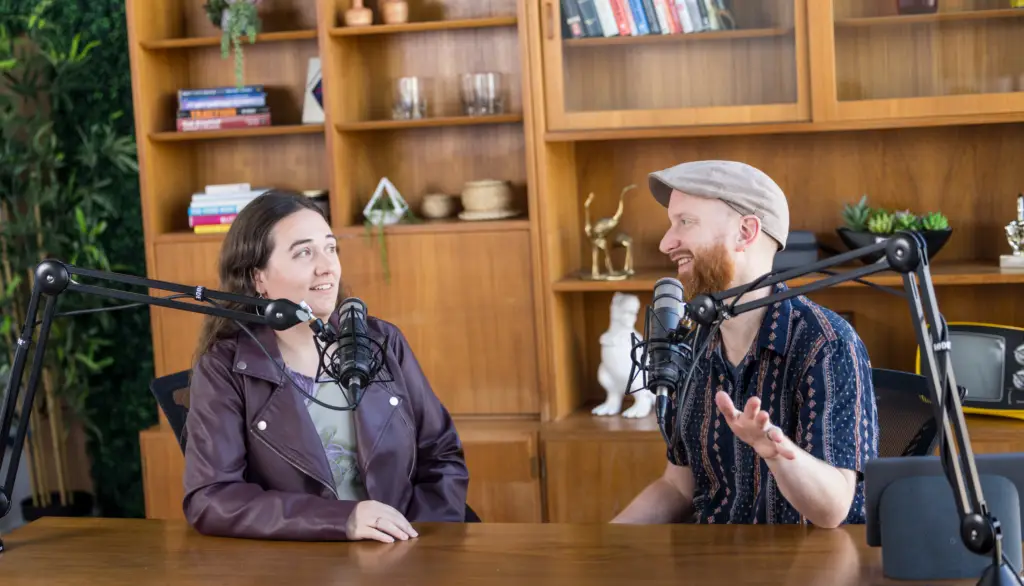
Every few years, podcasting finds a new debate. Right now, it is audio vs video.
Do you need video? Is audio still enough? Are clips replacing full episodes? Is YouTube the new home for podcasts?
These sound like format questions. They are not. This is a discovery question dressed up as a format debate.
At Resonate Recordings, we have worked since 2014 as one of the podcast production companies that clients like Honda, Amazon, and Stanford trust to build shows that grow. So we have seen which shows still win and which ones stall. The answer is rarely about format.
What matters in 2026 is whether your content gets found, consumed, and shared where your audience already is.
Audio Podcasting Still Has the Largest Listener Base in 2026
How Many People Listen to Audio Podcasts in the U.S.
The U.S. has 149.7 million weekly audio podcast listeners in 2026 (EMARKETER). Video podcast viewers come to 79.5 million. Audio still has nearly twice the reach.
The total audience for podcast content (audio plus video) sits around 121.5 million weekly consumers. Audio carries most of that volume. Video is the faster-growing slice.
Why Audio Fits Into Daily Life Better Than Other Media
Audio works because it fits into time that other media cannot reach. Listeners tune in while they commute, while they work out, or while they cook. Video and written content compete for full attention. Audio fills the in-between time that nothing else can claim.
That habit is not going anywhere. Audio is the format that earns 30 minutes a day from people who would never sit through a 30-minute video.
The Limits of Audio-Only Distribution
Audio struggles in three places. It is harder to discover. It is harder to share. It is harder to repurpose.
There is no algorithm pushing a podcast feed to a new listener. A 60-minute episode is a high-friction recommendation. And audio cannot live natively on the platforms where attention now sits.
If audio is your only format, growth depends on platform search, word of mouth, and your existing audience. That can work. It also creates a ceiling.
How Video Changed Podcast Discovery (Without Replacing Audio)
The Platforms Driving Podcast Discovery in 2026
YouTube, LinkedIn, Instagram, and TikTok now drive the discovery of new podcast audiences. These platforms reward content that is visual and short. Clips, hot takes, and strong opening moments perform well because they meet people where they are.
YouTube now leads with about 33% of U.S. podcast listeners, followed by Spotify at 26% and Apple Podcasts at 14% (Beamly). For video-first shows, short clips bring in 20% to 40% of new audience (Podcast Studio Glasgow).
How Short Clips Became the New Top of the Funnel
Your next listener is not opening Apple Podcasts to browse for new shows. They are scrolling. A strong clip or a clear point of view becomes the way they find you.
Once the clip lands, the full episode is one tap away. The clip carries the discovery. The full episode carries the relationship.
How Apple Podcasts Responded to the Video Shift
Apple’s recent push into video reflects the same shift. New video tooling in the Apple Podcasts app. Higher-quality video formats supported. Apple is the slowest-moving of the major platforms, and even Apple is investing here. We covered the update in detail in our breakdown of Apple’s major video podcast update.
Video does not replace audio. Video expands how and where your content gets seen.
Why YouTube Became the Top Podcast Discovery Platform
YouTube grew into podcasting’s biggest discovery engine for three reasons. Each one closes a gap that Apple and Spotify still leave open.
Algorithmic Recommendation Pushes Shows Without a Search
Apple Podcasts and Spotify rely on browse-and-search. A new listener has to type your show’s name or stumble onto a chart to find you.
YouTube does that work for them. Its recommendation engine actively pushes new shows to viewers based on watch history. Your next listener does not need to know your show exists. The algorithm finds them for you.
Short Clips Pull Viewers Into Full Episodes
YouTube Shorts give a show a 60-second sampler. If the clip lands, the full episode is one click away.
Apple and Spotify do not have an equivalent format. Discovery on those platforms still depends on the listener knowing what to look for. YouTube is the only major platform that lets you reach someone who has never heard of your show.
TV Viewing of Podcasts Has Overtaken Laptop Viewing
YouTube on a TV is a bigger podcast experience than earbuds on a commute. Long-form podcast viewing on television sets has overtaken laptop viewing for podcast content in 2026.
For B2B audiences, executives, and decision-makers, YouTube on a smart TV is where they meet new voices. That changes how the content needs to look, sound, and feel.
The Podcast Content System: One Episode, Many Pieces of Content
The real shift in podcasting is not format. It is structure.
Most brands frame the choice as audio or video. That is the wrong question. The right question is this: how does one episode turn into multiple pieces of content across multiple channels?
What a Podcast Content System Actually Looks Like
A podcast content system treats the recording session as raw material, not as the finished product. The session produces audio, video, transcript, and B-roll. Each one becomes a different asset for a different platform.
This is the shift that separates the top-performing podcasts from the ones that stall. The episode is no longer the deliverable. The asset library it produces is.
How One Episode Becomes Five or More Assets
One conversation can become:
- A full audio episode for the podcast feed
- A long-form video for YouTube
- Multiple short clips for TikTok, Instagram, and LinkedIn
- Written content for email and LinkedIn posts
- Talking points for sales conversations and pitches
When that system is in place, the format becomes a starting point, not a limit. The shows that grow take every episode and turn it into a week of distribution.
When Video Matters More Than Audio for a Podcast
Video becomes essential when discovery depends on it. Three specific cases make video the better investment.
When Discovery Depends on Visual Platforms
If your growth plan includes YouTube, LinkedIn, or short-form social, video is not optional. Video is how people find you. That does not mean making video harder than it needs to be. It means making video that is clear, intentional, and built for distribution.
When You Are Building Founder or Executive Thought Leadership
Seeing a founder or executive speak builds trust faster than audio alone. Body language, eye contact, and visual presence carry signals the human ear cannot pick up.
For thought leadership content, video is the more efficient way to build authority. A 90-second clip of a founder making a strong point does more for credibility than a written post saying the same thing.
When Video Clips Outperform Audio Clips in Sales Cycles
In sales cycles, a 90-second video clip often carries more weight than a link to a full episode. The prospect sees the speaker, judges them as a person, and decides if the rest of the content is worth their time.
An audio clip on LinkedIn rarely converts in the same way. Sales teams reach for video first because it shortens the trust-building step.
When Audio Is Still the Better Choice for a Podcast
Audio has three clear advantages over video. Each one matters in a specific context.
When You Need Deeper Listener Engagement
Audio listeners spend more time per episode than video viewers in most cases. Listeners commit to the full hour while they drive, walk, or work out. Video viewers skip, scrub, and switch tabs.
If depth of engagement is the goal, audio is the stronger format. The listener gives you their full attention for longer.
When You Want Lower Production Overhead
You do not need a full video setup to produce a high-quality podcast. A good mic, a quiet room, and a basic editing workflow is enough.
Adding video adds cameras, lighting, an editor, and a new export pipeline. For a small team, audio-only is faster and cheaper to run.
When You Are Building a Habit-Based Audience
Audio podcasting is one of the most reliable recurring consumption habits in media. Listeners subscribe once and come back week after week.
Video discovery still skews toward one-off views. If you want a base of returning listeners, audio is where the habit forms.
Audio is still the core product. Audio builds depth, trust, and long-form engagement. When the audio is done well, it becomes the base everything else is built on. That is why high-quality audio production still matters, even as formats expand.
Why Most Podcasts Fail to Grow (And It Is Not the Format)
Most podcasts do not fail because the format was wrong. Most podcasts fail because the content was never designed to leave the episode.
The Single-Format Trap That Limits Reach
Most podcasts are published in one place. The RSS feed gets the audio. Nothing else ships. Without clips on social, written content for email, or video for YouTube, the show is invisible to anyone outside the existing audience.
This is the single-format trap. The episode is the only output. New audience cannot find it because there is nothing on the platforms where they spend time.
Why Episodes Need to Become Other Content Types
An episode is raw material. On its own, it reaches the people who already follow you. As a content system, it reaches the people who do not.
The shows that grow take every episode and turn it into a week of distribution. The audio gets cut into clips. The clips go to social. The transcripts become written posts. The best moments anchor the next sales pitch.
For more on this pattern, see our breakdown of the biggest mistakes brands make when starting a podcast.
How to Make a Podcast Discoverable in 2026
Step back from the format debate, and the real test gets simpler. A discoverable podcast clears four bars. Each one has its own fix.
Findability: Where Your Audience Already Searches
Make sure your podcast shows up where your audience already looks. YouTube and search engines drive a meaningful share of discovery. SEO, smart titles, and clip distribution all play a role.
If the search query exists, your podcast needs to be in the results. That means episode titles built around real keywords, not clever names that nobody searches for.
Consumability: How Easy Your Content Is to Engage With
Can a new listener pick up your show in 30 seconds? Strong hooks at the top of the episode. Clear show descriptions. Episode titles that match search intent.
Every barrier to entry costs you the next listener. Most podcasts have too many: long intros, unclear positioning, episode titles that mean nothing to outsiders.
Shareability: Whether Listeners Naturally Spread Your Show
A podcast that grows is a podcast people share. That means clip-friendly moments, quotable lines, and content worth saying “you have to listen to this” about.
Build for sharing, not for completion. A great 90-second moment people send to their friends does more for growth than a great 60-minute episode nobody clips.
Authority: What Each Episode Says About Your Expertise
Every episode is a credibility signal. Listeners decide if you are worth their time based on three or four episodes. Each one needs to reinforce that you are an authority in your space.
Random episode topics dilute that signal. A focused show with a clear point of view builds authority faster than a varied one.
If discovery is your weakest link, our guide on podcast SEO made simple covers how to get found through search.
Conclusion: Build a Content System, Not Just a Show
The best podcasts in 2026 are not “audio shows” or “video shows.” They are content engines.
Audio builds depth. Video expands reach. The system connects everything.
At Resonate Recordings, we have spent over a decade helping brands design these systems. We turn episodes into multi-channel content engines that drive awareness, engagement, and revenue. Whether you need podcast marketing support or a full production team, we can help map the system that fits your show.
Book a call with a Resonate strategist.