

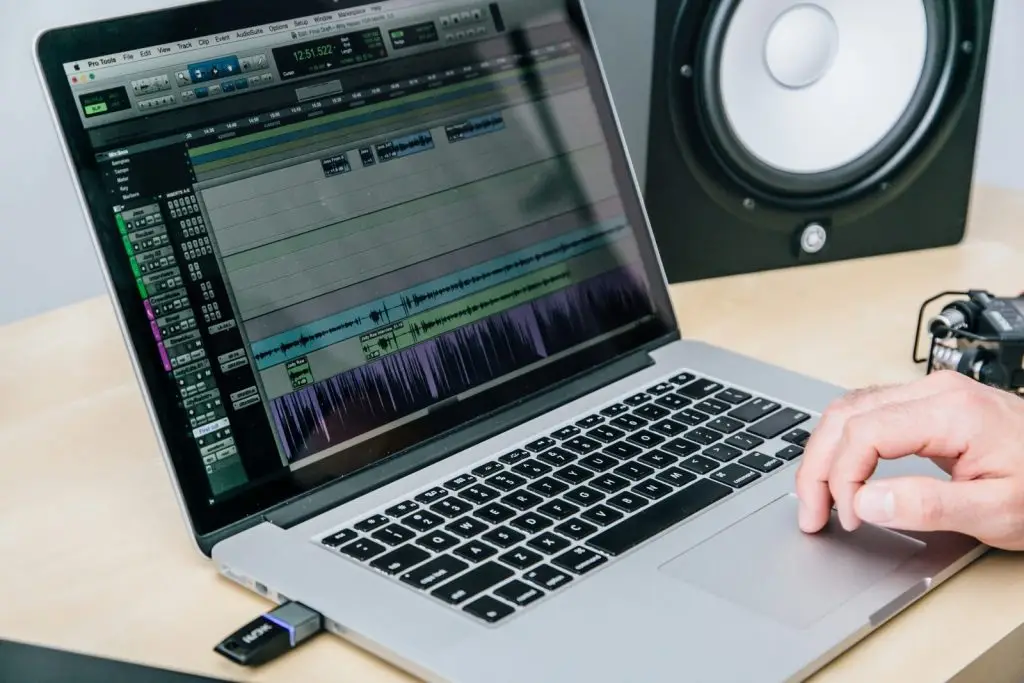

A common question that surfaces for podcasters and one that we often hear is in regards to podcast editing. Naturally. What is podcast editing?
Why does podcast editing matter? Is it really all that beneficial? Here we will tackle the idea of why podcast editing matters, common myths about podcast editing, podcast editing tips, common mistakes, and finally should you outsource the editing for your podcast. While there are no doubt a number of reasons why podcast editing matters, lets jump in and look at 3 common reasons here for your consideration.
3 Reasons why you should edit your podcast
1. Editing can make your podcast more listenable
The great thing about podcasting is that it can be very personal. You choose the concept. You choose the talking points. You choose the guests. You choose the overall trajectory of the show. You can decide what you want to make out of it. It’s your podcast and you can choose what you want it to look (or rather, sound) like. These are all part of the growing number of reasons that people come to podcasting in the first place. I regularly tell people that (within reason) there is no right or wrong way to podcast because it’s such a personal and subjective artform.
The same goes for the discussion around podcast editing. There is no requirement for your podcast content to be edited. There is no standard that says you need to have your content edited for it to be a great podcast. While more highly produced, narrated or storytelling styled podcasts will inevitably be required to be edited by nature, a simple interview or dialogue-focused podcast does not have to be. However. We’ve all heard the podcast that’s just slightly too real and too raw. We’ve all heard the podcast that had more than a couple of distracting background noises. We’ve all heard the podcast that suffered from the frustrating (yet sometimes unavoidable) audio drift. We’ve all heard the lip smacks and throat clears that can make you cringe.
So while there is something approachable, valuable, and even attractive about more vulnerable or authentic-sounding podcasts, the point is that even a little editing can go a long way. During the editing process your podcast can have all of the pauses, filler words, stutters, background noises, and all other things that are distracting, removed. The result is smooth, polished content for your podcast that sounds really great. The truth is the editing process makes your podcast more listenable by removing all of the things that people don’t want to hear and frankly, the things you shouldn’t want other people to hear. In many cases, this is one simple thing that will make you different from the myriad of other podcasts out there today.
2. Editing shows you’re not just another hobbyist
As podcasting continues to grow there’s no doubt that hobbyists will continue to jump on the bandwagon. And that can be great news for podcasting because again, it shows how accessible it is. You don’t have to be a part of a big network or have a professional podcast producer to have a great sounding podcast. While this is good news for prospective new podcasters, inevitably this can also result in a surge of subpar podcasts making themselves available for the listening world.
To define the terms, by hobbyists I simply mean the podcaster who is approaching podcasting as a hobby, who is probably first exploring the medium, and who is likely a little slower to put much money into their hobby until they build their confidence. Part of the challenge then will be how to find ways to differentiate yourself as (desirably) a more polished, respected podcast from just the average Joe. There’s no doubt that an established company investing in creating a branded podcast wants to differentiate itself from the brand new podcaster. And while there are a number of things that can differentiate the new podcaster from a more respected podcast, few things will be able to distinguish the two greater than editing.
Editing your podcast shows the world you’re not just another hobbyist taking to the microphone. It communicates to your listeners you take your podcast seriously and you want them to enjoy the listening process. It shows the world you believe in what you’re doing even if it requires a little more investment or sweat-equity on your part. Now to be clear you don’t have to be a top-chart podcast to profit from editing your podcast but something as simple as this can have a drastic difference in showing the listening world you’re not just another random podcast. Having your podcast content edited is one of the best ways to differentiate yourself from the myriad of other podcasts out there who are fighting for the time and attention of your listeners.
3. Editing may help you gain more listeners
Building on this last idea the simple truth is that having your podcast edited can not only show the world you’re not just another hobbyist, but it can also inevitably help you gain more listeners as a result. Think about it. When you publish your content you are hoping, expecting and even asking your listeners to invest their time in you by listening to your episode. You are asking them to give up 20, 30 or maybe even 60 minutes of their life to listen to what you have to offer to them. Fair enough.
But if you are offering up an episode of content that is chock full of things that are at best unnecessary, but at worst (and in all likelihood) a frustration to your listeners, you shouldn’t be surprised when your followers fall off and people stop tuning in. People take their podcast listening seriously. Current estimates show that the average listener (80% to be accurate) will tune in to all or most of your episode. If this is the case, you have to make sure you take your best swing with your podcast every time you release your content because people are looking for something worth tuning in to and when they do, they are committed.
By investing in editing your podcast you make your content more listenable, you differentiate yourself from others who won’t and the result will very likely be a higher number of listeners. But if you post content that is a challenge to listen to, you’re likely to just be another casualty along the road to your potential listeners’ aim to fill up their top playlist.
By offering edited and polished audio you are showing listeners you’re worth listening to, that they can gain something valuable from your podcast (without having to endure any frustrations) and that they have a reason to stick around.
There are no doubt a number of other reasons to have your podcast edited, all worth considering and with considerable value. But in response to the naysayers, I want to be clear. Having your podcast edited does not mean you sacrifice authenticity or personality. Just because your content goes through a refinement process does not mean you will lose any of the character or beauty that makes it your podcast. I would argue it’s actually quite the opposite. And whether you choose to do the editing yourself or entrust it to a professional, editing your podcast audio will no doubt take your podcast to another level and is a simple investment that will have a tremendous payoff.
Now that we have hopefully convinced you why you should edit or have your podcast edited, let’s look at 6 common myths that we hope to debunk around podcast editing.
6 myths about podcast editing
1. Only the sound quality of the audio really matters
Kicking off the list of common myths is the idea that only the sound of the podcast audio really matters. By this, most people mean that only having equalized levels and reduced background noise is all that people really care about. The focus here in this stream of thought is more on the mixing and mastering process and less on the editing process. Now to be frank most people who think this aren’t usually speaking from a place of knowledge about either the editing or the mixing processes because anyone who genuinely cares about high-quality audio will tell you they are not mutually exclusive. Achieving “good audio” is much more than just automating equalized levels and covering up annoying cell phone rings in the background.
To achieve great sounding audio starts with having quality recordings and then carries over into post-production where the recordings are edited, mixed, and mastered for highly polished audio that sounds excellent. Taking care of ambient sounds and background noises alone is not enough. If you’re really concerned about having quality audio then you have to understand that having your content edited to remove the verbal distractions (like long pauses, repeated words, umms, etc.) as well as environmental distractions is vitally important in helping you achieve your goal of having high-quality audio.
2. People won’t really know the difference
Building on the previous thought about only the quality of the audio really mattering the myth of people not really caring or even knowing the difference is also offered as another reason not to have podcasts edited. The logic more or less is that the content is what really draws people in and keeps them around, so having a few things here and there that are annoyances are not a big deal and that the reality is those things aren’t as obvious to others as they are to ourselves. In response to this, I would first say that that is an incredibly naive thought process and is (potentially) somewhat insulting to your listeners.
The reality is that people are very observant about what they are choosing to tune in to, especially if it’s on an ongoing basis. To think that people won’t notice and don’t care is simply not true. The highest consumed podcasts are usually the ones that are the most refined and well-done. Most podcast listeners gravitate towards podcasts that are highly engaging, and easy to listen to, not to mention that are at a reasonable listening length.
While you will no doubt maintain and possibly even gain listeners if your podcast is left unedited, the reality is that by investing your time or resources into the editing process you will be reducing the length of your podcast which will make it appealing to larger audiences, you will make the quality more listenable and you will allow your content to be more engaging since it won’t have to compete with a myriad of inherent distractions.
3. Editing sacrifices personality and authenticity
A major concern for people who are resistant to podcast editing is that they think they will be sacrificing personality and authenticity in their podcast if it undergoes an editing process. The fear is that all of the things that make the podcast more approachable-the natural pauses, the endearing awkwardness of the back-and-forth, and the subtle nuances that make it more palatable will be lost and all that will be left is a robotic mess of stale questions and answers.
Now I want to be clear. These things are all great features to be left in your podcast if the nature of your podcast allows for them without it being too clunky or awkward. But just because you want these things to remain does not mean that your podcast will not benefit from an editing process and it does not mean these things have to be removed. The editing process is what you want it to be. If you want a highly (or tightly) thorough editing process, those things can all be removed. But if you would like those special characteristics to remain, this is feasible and you will not have to surrender all of the qualities that make your podcast unique or interesting. The key here is to develop a better understanding of what can still be edited while keeping your eccentricities intact. And trust me. There’s likely to still be a lot that can be edited out while preserving the things you care about most.
4. It’s a difficult process and too much of a headache
Another common objection about podcast editing relates to the difficulty of the process and how cumbersome it is. This, when combined with other thoughts like listeners not really knowing the difference (or caring), typically results in an unedited podcast. Yes, truth be told the editing process does require time and effort, especially for it to be done well. For this reason, many people stay away from editing because they feel overwhelmed by how complicated the process seems. In reality, you just need a little guidance.
And if you’re open to giving it a shot yourself we’ve provided some tips and tricks below to get things in motion. Depending on the length of your audio and your learning capacity with an editing program, you may likely be able to edit your episodes in a handful of hours (per episode) and whittle down the time with experience. But from our experience many people won’t be bothered, which is why editing services are made available; to help lighten the load. The point is simply this: just because it’s a process and skill that has to be learned and improved over time does not mean you should abandon ship. Because of the value editing provides you should be open to learning the process yourself or handing off the task to a professional editor should time and resources allow.
5. My podcast is not highly produced, so why bother
After the vision is cast, the interviews are scheduled and completed, the podcast needs to be prepared for the world to hear. That process involves editing, mixing, and mastering the content recorded into cohesive episodes. This will likely involve a lot of elements like narration, incorporating news clips, music transitions, and other elements to help tell the story. The producer’s role will be to either execute this process themselves if they have an editing or engineering background or work with the production team to make sure the vision is being carried out.
6. It’s expensive and not worth the investment
A final myth about podcast editing that keeps droves of podcasters at bay is the issue of cost. Most people have preconceived ideas about the cost of editing their podcast and feel it’s simply not worth the investment. And while I could say something pithy like you can’t afford to not edit your podcast, I do not want to run the risk of sound overly simplistic. I realize that many podcasters (particularly those newer to podcasting) are operating on a shoestring budget and editing just puts things over the edge.
I get it. I would offer a few discussion points though. First, find ways to minimize the cost. Obviously taking on the editing yourself (at least for a season) is a great way to reduce the cost. The challenge here though is the never-ending tug-of-war between time and money to see which one ranks higher in your list of priorities. While you will no doubt save money, it will require a lot of time to learn and understand the editing process. This is simply something you will have to figure out for yourself. Secondly, though I would also encourage you to do some thorough study to see what the actual cost of editing services may be and to dig a little deeper to see what you may be able to do to help mitigate some of the cost. For example, a more simplified post-production process would require less time from an engineer and would likely cost less. By simplifying the complexity of your podcast you can save time and money. Another thought is that you may be able to find a way to partner with your production team to offset the cost of the editing service through some other means like adding in a shoutout or an ad spot for their services into your podcast. It’s worth the conversation if the end result is better audio.
If you decide that you are going to edit your own podcast or are looking for ways to improve your podcast editing skills, this next section should help.
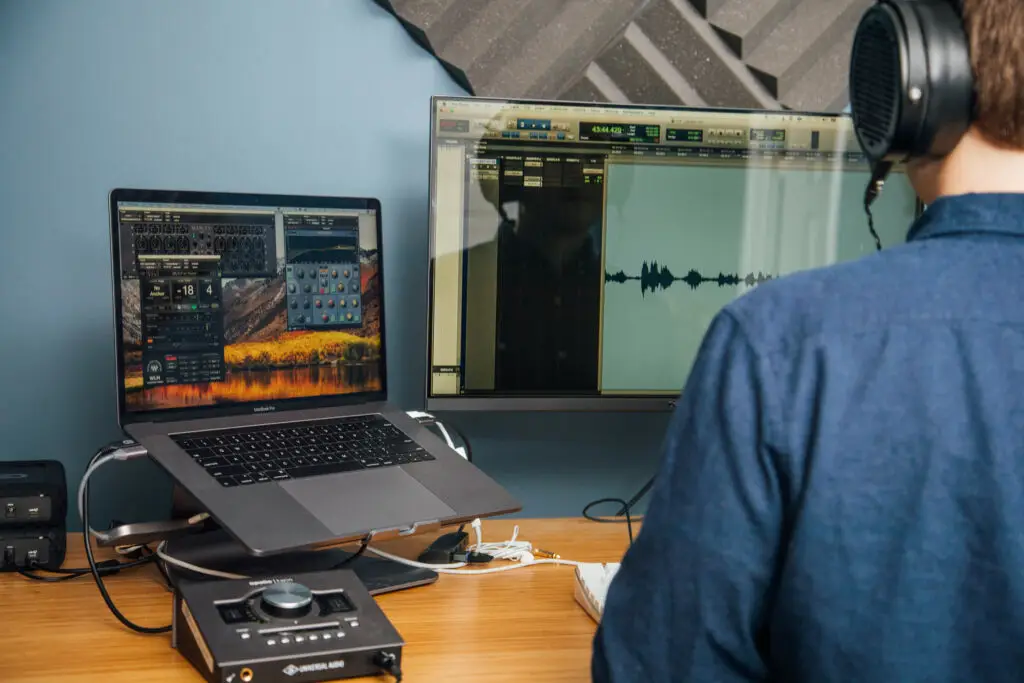
Podcast editing tips
Try various editing modes
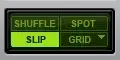
There are different editing modes within certain audio editing platforms that can be useful to help you save time. In Pro Tools, the shuffle mode can be used to quickly splice and move two different edit points together. Additionally, the spot mode can be used to move an audio region to a specific timestamp within the timeline. Take some time to learn and try out the various editing modes assigned to your platform. It will boost your editing productivity.
Copy/paste quality consonants and breaths
Sometimes there are certain consonants and breaths that are problematic or don’t sound good. For example, a plosive (‘P’ sound) is typically caused by the host being too close to the microphone and by moving too much air through the diaphragm of the microphone. An effective fix to this problem is to copy and paste another ‘P’ sound that isn’t popped and sounds more natural over the problematic area. This is very tedious, but it makes a huge difference in the overall quality of the finished product.
Remove lip smacks/clicks
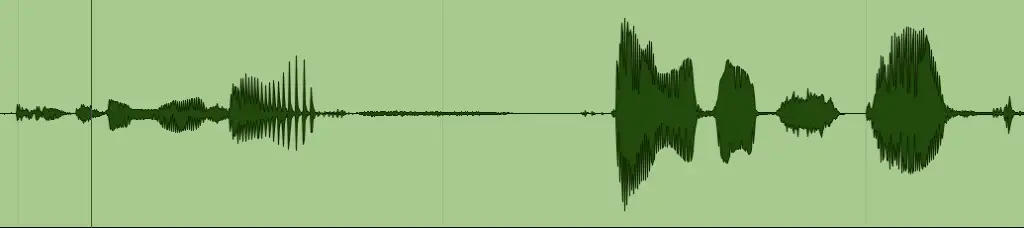
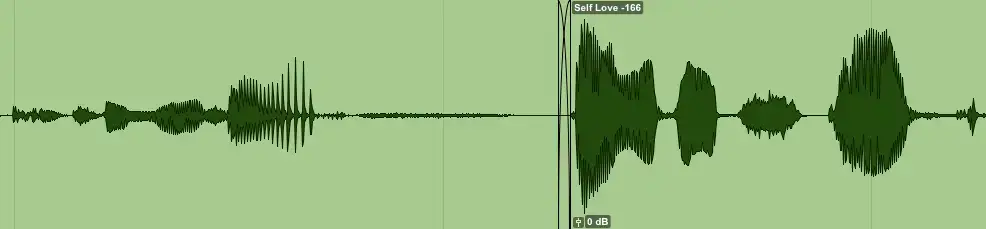
Do you ever get annoyed by hearing a continuous barrage of lip smacks? We sure do, and nothing can be more annoying than hearing a lip smack every other sentence. Editing out lip smacks and mouth clicks will make your podcast a more pleasant listen. Your audience will thank you!
Group your tracks
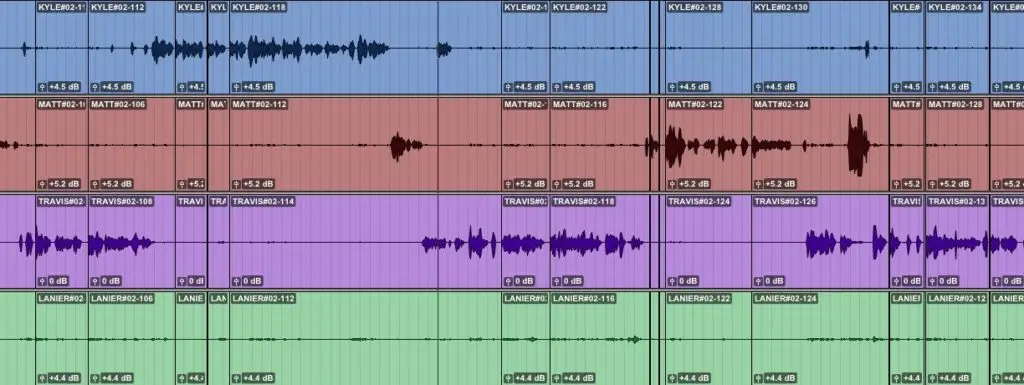
If you have more than one dialogue track to edit, grouping tracks together, or multi-track editing, can save you time and help keep your session organized. This also keeps the tracks in phase and in line with each other.
Use headphones
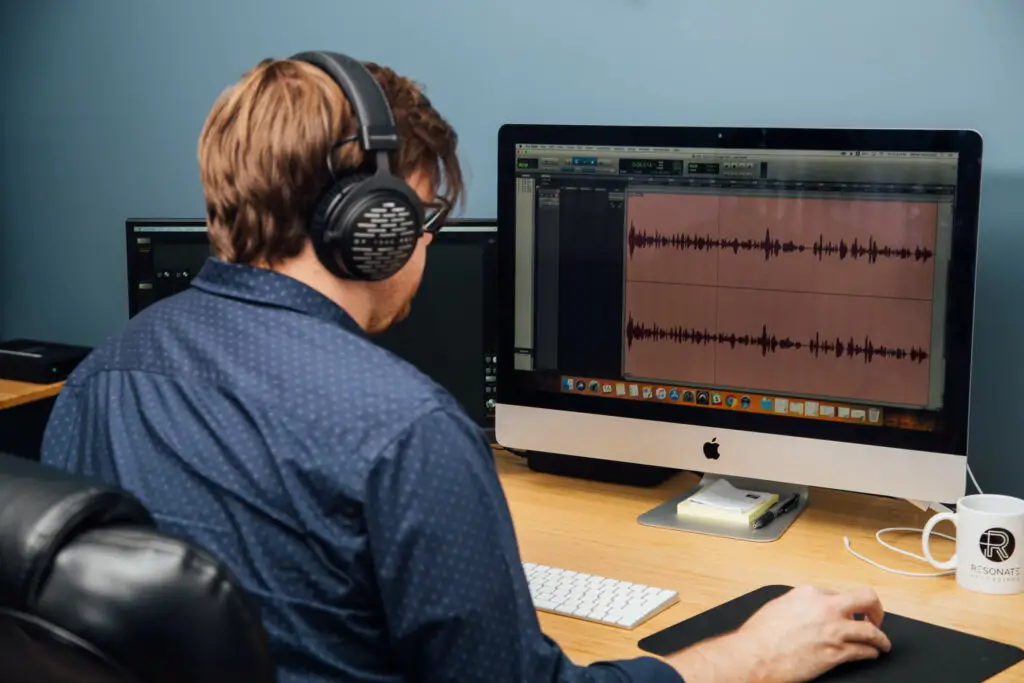
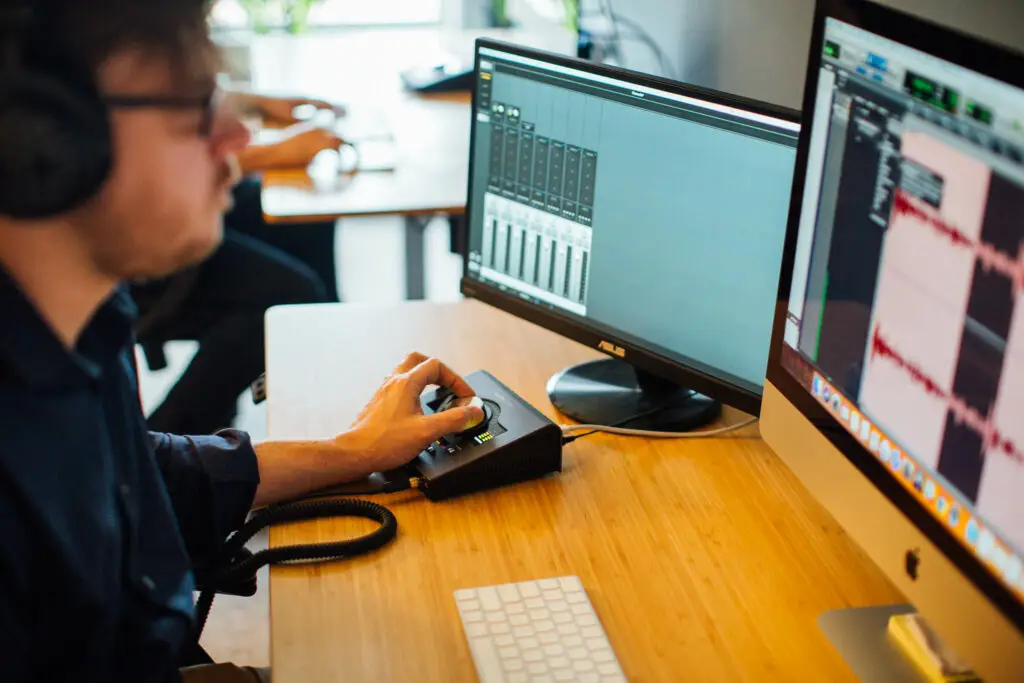
One of the most useful tips when editing is to use good quality headphones. Over the ear, closed headphones work great to help isolate you from your editing environment. Listening on headphones will help you hear all of the details and nuances of the voice much better than listening on computer speakers or even on higher quality near-field monitors. This makes hearing subtle details such as breaths much easier.
Read our ultimate guide to the best podcast headphones here.
Listen back to your edit
This may seem like a no-brainer, but you need to listen back to your edit. Don’t exchange speed for quality. It may take some more time to go back and listen, but it will potentially help you catch even more editing mistakes. Listen without looking at your screen, and see if you can detect any of the common mistakes listed in this blog. Remember, the best edit is the one that is unnoticeable. If you can’t hear it, then you know it won’t be distracting for the listener.
Common podcast editing mistakes
Watch your tone!
One of the biggest editing mistakes is when there is a sudden shift in the tone of the voice. Editing together two different segments of audio or merging different sentences together can be tricky. Not only can there be a change in the tone of the voice, but also a change in volume and a change in background noise or room tone. Another thing to listen for is room reverberation and echo. Sudden cuts at the end of phrases can prevent the natural room reverberation, so it’s best to listen for the end of the room decay before making an edit or cut.
Spatial awareness
Pacing and space are crucial for the overall feel of a podcast. Too much space can sound awkward and unnatural, which can easily disengage the listener. Too little space can make the dialogue sound too choppy and confusing to follow. Finding a natural flow and feel to the conversation is extremely important in creating a well-edited podcast. Space can be utilized to create a pause between different segments to help the listener digest what they just heard. Adding space or a breath between edit points can be beneficial to making a smoother edit and transition.
Just breath
Another common mistake is cutting off breaths too abruptly or missing breaths altogether when making an edit. Cut off breaths occur when a breath is chopped off or incomplete. Missing breaths occur when a breath is edited out due to two different segments being put together. Double breaths can also be a problem when editing. This happens when there are two breaths back to back. All of these errors cause the dialogue to sound unnatural and choppy. When looking at audio waveforms, breaths can be difficult to spot because they are so much lower in volume compared to other parts of dialogue. To make it easier to spot breaths we recommend increasing the size of the waveforms in your DAW.
Mind your F’s and H’s
In addition to clipped breaths, cutting off consonants can be an audio editing mistake. Common consonants include ‘S’ ‘F’ and ‘H.’ ‘S’ consonants on a waveform can be easy to spot because they look like little footballs. However, the consonants ‘F’ and ‘H’ can be more difficult to see and are often more subtle. When editing different takes together, a consonant can be a great place to make your edit because there is typically minimal tonal differences between consonants.
Music to one’s ears
Even though dialogue makes up over 90% of podcast content, it is also important to pay attention to editing music. Music in podcasts typically serves as an intro/outro and as a transitional element within podcasts to give the listeners a break. However, bad music edits can be very noticeable and distracting.
One of the most common mistakes in music editing is when the tempo and flow of the music fluctuate due to a bad edit. This can be avoided by finding a good loop point in the music where the elements are fairly static and lining up two transient points in the waveform. The best transient points to use in music are often percussive elements such as kick drum and snare. Be careful not to cut other musical phrases short like guitar parts, piano, synth, vocals, etc. Long fades can also be useful for music transitions to give the listener a heads up as to what is about to come.
Should you outsource podcast editing?
While many podcasters will opt for handling the editing themselves, you, like many others, may choose not to be bothered and choose to find an editor to handle the task for you. Just a word of caution here. Just like with most things in life, you get what you pay for. I would say that the only thing worse than unedited podcasts are poorly edited podcasts. If you do look for a partner to handle the editing, develop a good relationship with an editor who is knowledgeable, who will be able to help you achieve the feel you are looking for and who can lighten your load to make your life easier. Our team holds degrees in audio engineering and has a thorough editing process that helps maintain the authentic feel and flow of your podcast.
If you have questions or would like to discuss podcast editing more in-depth, don’t be a stranger. The Resonate team aims to make podcasting easier by offering you the ability to have your podcast professionally edited to make sure you are providing the absolute highest quality content for your podcast. If you’d like to learn more about our services, check out our podcast editing services or schedule a call with our team to talk more about your podcast and what it would look like to have it handled by the team at Resonate Recordings.